About IQAC
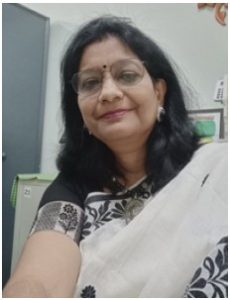
Dr. Sanjukta Mondal (Parui)
Associate Professor
Dept. of Zoology
IQAC Coordinator
The Internal Quality Assurance Cell (IQAC) of Lady Brabourne College, Kolkata is responsible for continuous improvement within the institution by initiating, planning, and supervising activities that enhance the quality of education at the College. It is the key body which focusses on quality enhancement of both academic and administrative processes and its consistent maintenance.
The vision of the Institution is Empowerment and Emancipation of its students. The Institution aims at nurturing a student who enters its Portals in adolescence and guiding her through her Undergraduate and Postgraduate years to a sense of maturation and self-belief. The road towards emancipation and empowerment is inclusive and holistic. The Institution with the help of IQAC makes an effort to develop value-based mind-set, intellectual perception, social and environmental sensitivity, health awareness through varied meaningful and participative programmes which goes far beyond the pure academic pursuits of the designated syllabus.
Genesis:
The IQAC in Lady Brabourne College is a post NAAC initiative (after the first cycle of accreditation in 2006) as a means to ensure continuous and consistent quality improvement and overall performance of the institution. It started functioning from 2008 and the composition included both External and Internal members (as per UGC norms till duration of 12th Plan i.e. 2012-2017).
The College reconstituted its IQAC in September, 2019 dissolving the previous body in total compliance to NAAC Guidelines (www.naac.gov.in dated 26th September, 2019).
Key Functions of IQAC:
- Quality Enhancement: Setting up quality benchmarks and establishing clear standards and parameters for various academic and administrative activities.
- Holistic development: It focusses on creating a learner-centric environment conducive to quality education, emphasizing on value-based education, discipline, intellectual growth, and overall development of the students, including those from underprivileged backgrounds. It organizes inter and intra institutional workshops, seminars on quality related themes, promotion of quality circles and events focusing on Indian Knowledge Systems.
- Academic Calendar: It is responsible for preparation and implementing the academic calendar.
- Facilitating research and development: IQAC supports faculty and students in conducting research and disseminating findings.
- Co-curricular and Extra-curricular Activities: It provides guidelines for co-curricular and extra-curricular activities and ensures proper allocation of support structure and services to improve the coordination between academic and non-academic aspects of the college.
- Collection and analysis of feedback – The IQAC encourages participation and a sense of ownership among stakeholders (Students, Teachers, Parents and Alumni) by collection and analysis of feedback from all stakeholders on quality-related processes, based on their evaluation on the institution’s performance and identifying areas for improvement.
- Promoting Best Practices: It encourages the adoption and implementation of best practices in both academic and administrative areas.
- Audits: IQAC organizes for periodical Academic Audit, Administrative Audit, Internal Financial Audit, Environment Audit, Green Audit and its follow-up.
- Preparing for accreditation and ranking: IQAC is involved in the preparation and submission of the institutional data for the Annual Quality Assurance Report (AQAR) and Self-Study Report (SSR) as per NAAC guidelines, data for National Institutional Ranking Framework (NIRF) and All India Survey on Higher Education (AISHE).
IQAC Members
Session 2025-27
| Chairperson |
|---|
|
1. Professor Siuli Sarkar
Principal, Lady Brabourne College |
| IQAC Coordinator |
|---|
|
2. Dr. Sanjukta Mondal (Parui)
Associate Professor, Department of Zoology |
| External Members |
|---|
|
REPRESENTATIVE FROM GOVERNING BODY |
|
3. Dr. Sanghamitra Mukherjee
President of the Governing Body, Lady Brabourne College |
|
REPRESENTATIVE FROM SENIOR ADMINISTRATIVE SERVICE |
|
4. Professor Ashutosh Ghosh
Former Vice Chancellor, University of Calcutta Former Vice Chancellor, Rani Rashmoni Green University |
|
5. Professor Prabir Kumar Das
Former Member Secretary, W.B. Higher Education Council, Govt. of West Bengal, Former Registrar, WBUT |
|
6. Dr. Nintu Mondal
Joint DPI, Directorate of Higher Education, Government of West Bengal |
|
REPRESENTATIVE FROM SOCIETY |
|
7. Dr. Syeda Shariquatul Moula Alquadri
Principal, Government General Degree Girls College, Ekbalpore, Kolkata |
|
8. Dr. Mohammadi Tarannum
Vice Principal, Surendranath Law College |
|
REPRESENTATIVE FROM ALUMNI |
|
9. Smt. Siuli Jana
Member of Alumni, Lady Brabourne College |
|
REPRESENTATIVE FROM INDUSTRY |
|
10. Mr. Madan Mohan Chakraborty CEO & MD
Iskraemeco India-global Smart Infrastructure Industry, Kolkata |
|
11. Mrs. Aditi Nundy
Managing Director, Dayco Securities Pvt. Ltd., Kolkata |
|
STAKEHOLDER (PARENT) |
|
12. Mr. Sourav Bose
Dark Horse, No. 152, 3rd Floor, S. P. Mukherjee Road, Kolkata – 700026 |
| Internal Members |
|---|
|
13. Dr. Parna Ghose
Associate Professor, Department of English |
|
14. Dr. Srimati Mukherjee
Associate Professor, Department of Philosophy |
|
15. Dr. Suchita Sinha
Associate Professor, Department of Botany |
|
16. Dr. Mou Roy
Associate Professor, Department of Economics |
|
17. Dr. Nupur Basu
Associate Professor, Department of Chemistry |
|
18. Dr. Keya Bose
Associate Professor, Department of Physics |
|
19. Dr. Papia Ganguly
Associate Professor, Department of Chemistry |
|
20. Dr. Suriti Ray
Associate Professor, Department of Political Science |
|
21. Dr. Joysri Acharyya
Associate Professor, Department of Economics |
|
22. Dr. Bidisa Chattopadhyay
Associate Professor, Department of Physics |
|
23. Dr. Arpita Bhattacharya
Associate Professor, Department of Bengali |
|
24. Dr. Sukanya Chakrabarti (Guha)
Associate Professor, Department of Chemistry |
|
25. Dr. Sudeshna Dasgupta
Associate Professor, Department of Physics |
|
26. Dr. Mahuya Mukhopadhyay
Associate Professor, Department of Microbiology |
|
27. Dr. Abira Chakraborty
Librarian (Associate) |
| Student Members |
|---|
|
28. Afreen Shah
B.A. 3rd Semester, Department of Political Science |
|
29. Sanjana Bhattacharya
B.Sc. 3rd Semester, Department of Economics |
Session 2022-24
| Chairperson |
|---|
|
1. Professor Siuli Sarkar
Principal, Lady Brabourne College |
| IQAC Coordinator |
|---|
|
2. Dr. Indrani Choudhuri Dutt
Associate Professor, Department of English |
| External Members |
|---|
|
REPRESENTATIVE FROM GOVERNING BODY |
|
3. Dr. Sanghamitra Mukherjee
President of the Governing Body, Lady Brabourne College |
|
REPRESENTATIVE FROM SENIOR ADMINISTRATIVE SERVICE |
|
4. Professor Ranjan Chakraborti
Vice Chancellor, Netaji Subhas Open University Former Vice Chancellor, Vidyasagar University |
|
5. Professor Prabir Kumar Das
Former Member Secretary, W.B. Higher Education Council, Govt. of West Bengal |
|
6. Dr. Bikash De
Joint DPI, Directorate of Higher Education, Government of West Bengal |
|
REPRESENTATIVE FROM SOCIETY |
|
7. Dr. Syeda Shariquatul Moula Alquadri
Principal, Government General Degree Girls College, Ekbalpore, Kolkata |
|
8. Dr. Mohammadi Tarannum
Vice Principal, Surendranath Law College |
|
REPRESENTATIVE FROM ALUMNI |
|
9. Smt. Siuli Jana
Member of Alumni, Lady Brabourne College |
|
REPRESENTATIVE FROM INDUSTRY |
|
10. Janab Md Shahabuddin
Company Executive, Wisdom Enterprise, Kolkata |
|
STAKEHOLDER (PARENT) |
|
11. Mrs. Chaitali Chakrabarti (Banerjee)
|
| Internal Members |
|---|
|
12. Professor Sanjukta Das
Professor, Department of English |
|
13. Dr. Aparna Sen
Associate Professor, Department of Microbiology |
|
14. Dr. Shabana Nasreen
Associate Professor, Department of Urdu |
|
15. Dr. Swati Dutta
Associate Professor, Department of Bengali |
|
16. Dr. Subhalakshmi Pandey
Associate Professor, Department of History |
|
17. Dr. Parna Ghose (CPE-II)
Associate Professor, Department of English |
|
18. Dr. Suchita Sinha (DBT)
Associate Professor, Department of Botany |
|
19. Dr. Mou Roy
Associate Professor, Department of Economics |
|
20. Dr. Joysri Acharyya (AQAR, DCF-II, PFMS)
Associate Professor, Department of Economics |
|
21. Dr. Sanjukta Mondal (Parui) [DBT, DST, AQAR]
Associate Professor, Department of Zoology |
|
22. Dr. Nupur Basu (CPE-II)
Associate Professor, Department of Chemistry |
|
23. Dr. Keya Bose (DST)
Associate Professor, Department of Physics |
|
24. Dr. Papia Ganguly
Associate Professor, Department of Chemistry |
|
25. Dr. Bidisa Chattopadhyay (AQAR, PFMS)
Associate Professor, Department of Physics |
|
26. Dr. Sukanya Chakrabarti (Guha) [DCF-II, PFMS]
Associate Professor, Department of Chemistry |
|
27. Dr. Suriti Ray
Associate Professor, Department of Political Science |
|
28. Dr. Arpita Bhattacharya (AQAR, DCF-II)
Associate Professor, Department of Bengali |
|
29. Dr. Sudeshna Dasgupta (PFMS, Website)
Associate Professor, Department of Physics |
|
30. Dr. Mahuya Mukhopadhyay (DCF-II)
Associate Professor, Department of Microbiology |
| Student Members |
|---|
|
31. Ms. Srimoyee Ghosal |
Session 2019-22
| Chairperson |
|---|
|
1. Professor Siuli Sarkar
Principal, Lady Brabourne College |
| IQAC Coordinator |
|---|
|
2. Dr. Indrani Choudhuri Dutt
Associate Professor, Department of English |
| External Members |
|---|
|
REPRESENTATIVE FROM GOVERNING BODY |
|
3. Dr. Sanghamitra Mukherjee
President of the Governing Body, Lady Brabourne College |
|
REPRESENTATIVE FROM SENIOR ADMINISTRATIVE SERVICE |
|
4. Professor Basab Chaudhuri
Vice Chancellor, West Bengal State University |
|
5. Professor Prabir Kumar Das
Former Member Secretary, W.B. Higher Education Council, Govt. of West Bengal |
|
6. Dr. Bikash De
Joint DPI, Directorate of Higher Education, Government of West Bengal |
|
REPRESENTATIVE FROM SOCIETY |
|
7. Dr. Farhat Ara Kahkashan
Associate Professor & Head of the Department, Department of Urdu, Victoria Institution, Kolkata |
|
8. Dr. Syed Shah Marhoonul Alquadri
Head of the Department, Department of Arabic, Maulana Azad College, Kolkata |
|
REPRESENTATIVE FROM ALUMNI |
|
9. Smt. Ajanta Chaudhuri
President, Alumni Association, Lady Brabourne College |
|
REPRESENTATIVE FROM INDUSTRY |
|
10. Janab Md Shahabuddin
Company Executive, Wisdom Enterprise, Kolkata |
|
STAKEHOLDER (PARENT) |
|
11. Dr. Prabir Banerjee
Department of Physics, A.B.N. Seal College |
| Internal Members |
|---|
|
12. Dr. Sanjukta Mondal (Parui) [NAAC Coordinator (3rd Cycle)]
Associate Professor, Department of Zoology |
|
13. Dr. Bidisa Chattopadhyay (In-Charge of AQAR, PFMS Operator)
Associate Professor, Department of Physics |
|
14. Dr. Joysri Acharyya (DCF-II, PFMS Approver)
Associate Professor, Department of Economics |
|
15. Dr. Sukanya Chakrabarti (Guha) [In-Charge of DCF II, PFMS Operator]
Associate Professor, Department of Chemistry |
|
16. Dr. Sudeshna Dasgupta (In-Charge of Website, PFMS Approver)
Associate Professor, Department of Physics |
|
17. Professor Sanjukta Das
Professor, Department of English |
|
18. Dr. Aparna Sen
Associate Professor, Department of Microbiology |
|
19. Dr. Shabana Nasreen
Associate Professor, Department of Urdu |
|
20. Dr. Swati Dutta
Associate Professor, Department of Bengali |
|
21. Dr. Subhalakshmi Pandey
Associate Professor, Department of History |
|
22. Dr. Parna Ghose
Associate Professor, Department of English |
|
23. Dr. Keya Bose (DST)
Associate Professor, Department of Physics |
|
24. Dr. Nupur Basu
Associate Professor, Department of Chemistry |
|
25. Dr. Suriti Ray
Associate Professor, Department of Political Science |
|
26. Dr. Papia Ganguly
Associate Professor, Department of Chemistry |
|
27. Dr. Mou Roy
Associate Professor, Department of Economics |
|
28. Dr. Suchita Sinha
Associate Professor, Department of Botany |
|
29. Dr. Natasa Dasgupta
Associate Professor, Department of Statistics |
| Student Members |
|---|
|
30. Ms. Shreyasee Dutta |
Vision & Mission
Vision
Lady Brabourne College, located in an urban area, in the heart of the vibrant city of Kolkata, the most important metropolis in eastern India, is dedicated to woman emancipation and empowerment since its inception in 1939. Each girl student, irrespective of her caste, creed, language and religion is considered a gift and the aim of the institution is to nurture her as self-confident and faithful modern Indian woman. The goal of the College is to give her exhaustive exposure in curricular education, life-skills, sports, cultural activities, and build her into a sensitive, analytical yet humane personality who will enrich India’s talented pool of human resource. The College aims to make her career orientated, so that a sense of economic self-sufficiency becomes second nature to the precious girl-child developing into woman hood. With a strong combined effort of the teaching and non-teaching staff coupled with the endeavors of the highly motivated and diligent students of the College, our immediate vision is to become a College with Excellence.
Mission
The College was established initially with the mission to impart education to poor Muslim girls but gradually the horizon broadened and the College developed into a multicultural Institution with students coming from varied backgrounds. The mission also progressed towards imparting education to women per se crossing all geographical, religious, cultural and socio-economic boundaries. The College logo carries the message “Sangachchhadhvam” which translates into commitment to unity. In keeping with this motto the Institution dedicates itself into a sacred and zealous space where imparting of curricular education is concerned; each Faculty member is naturally a mentor and each student is cared for with love, respect and sensitized to inculcate necessary discipline. The Faculty and Students are engaged in an eternal and coordinated journey to ensure the blossoming of every individual girl-child who enrolls herself in the College. Every effort is made to make the individual student aware of her unique potential, overcome inhibitions, if any, and engage in a fulfilling self-discovery. There is assurance that she may become the person of her choice – educationist, scientist, doctor, administrator, activist, engineer, social worker, poet and author, sportsperson or performing artiste. The mission is to see that in her choice, the primary stakeholder understands her true aptitude and gets the right advice and direction.
The College Anthem ‘Eko sutre bandhiyachhi sahasrati mon’ meaning, thousands of minds are tied together by a single string, infers the existence of the invisible string of harmony that joins every element of the Institution as it progresses in its pursuit of excellence. There is harmony between its students, teachers, non-teaching staff, Research Scholars, Head of the Institution on one hand which extends to guardians, alumni, the Governing Body members, IQAC, former teaching and non-teaching staff on the other hand.
The institution is not purely idealistic but is more committed to creating a balanced space; there is the motivation to dream and aim higher but at the same time the need for checks and balances to instill humility for the human society at large and the environment that nurtures every man is considered to be important.
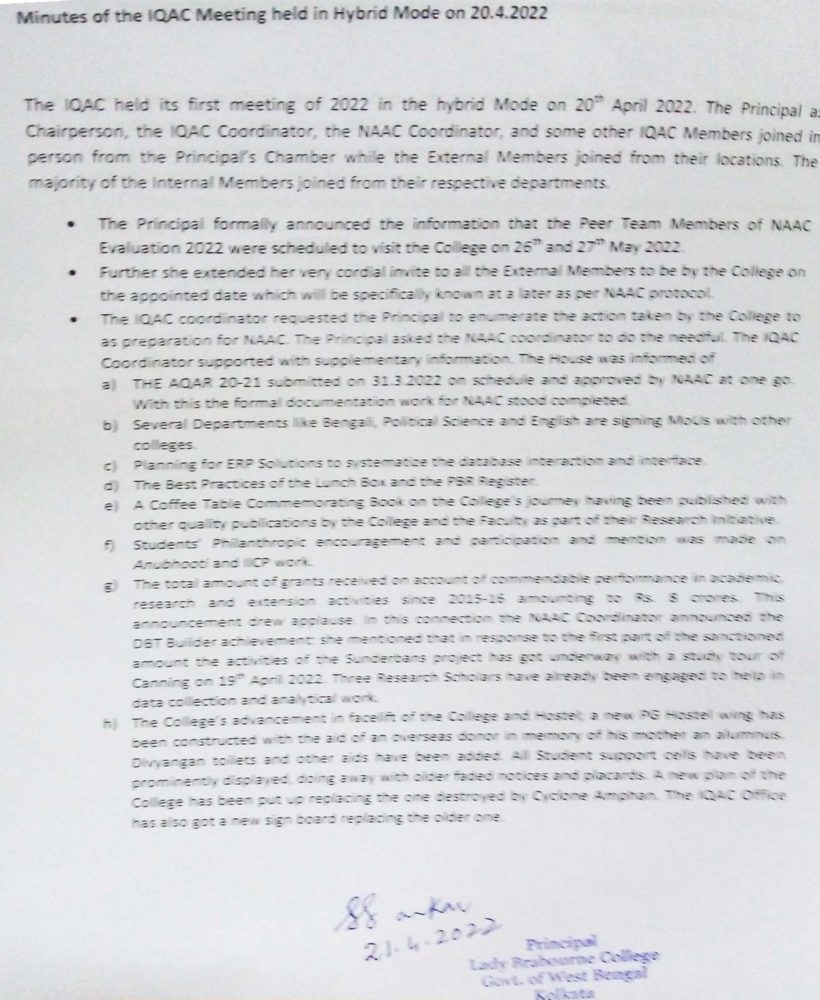
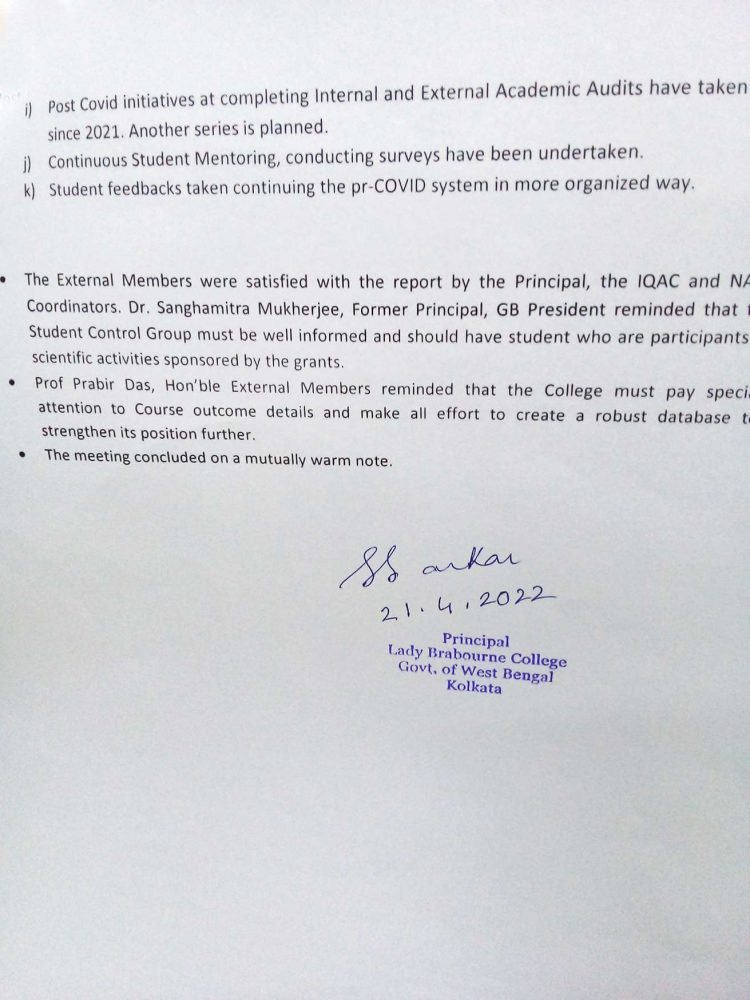
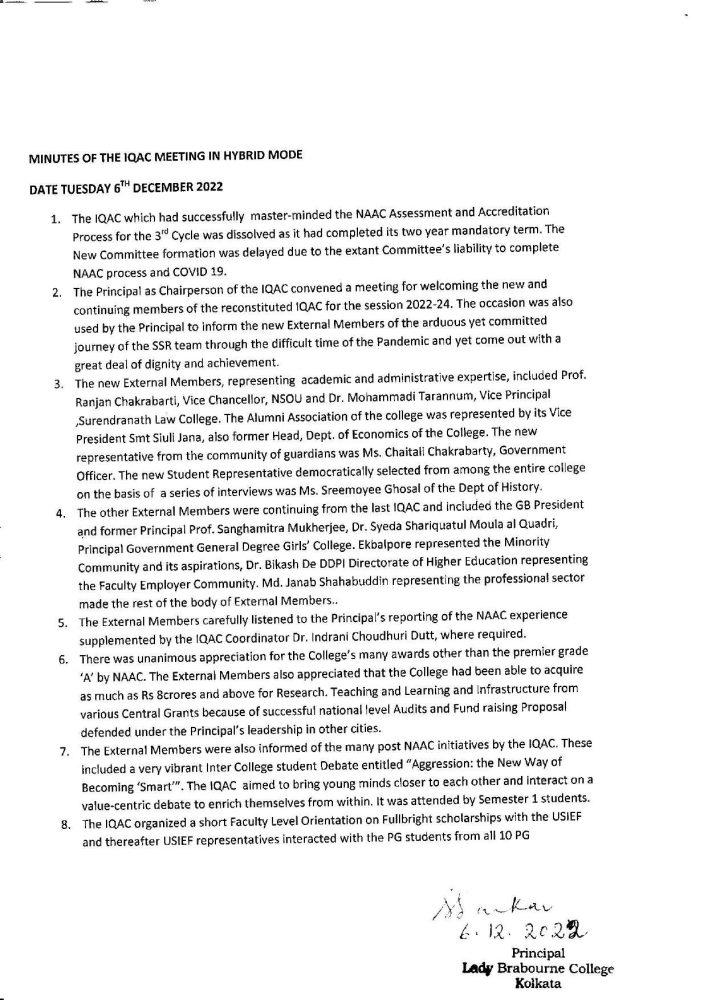
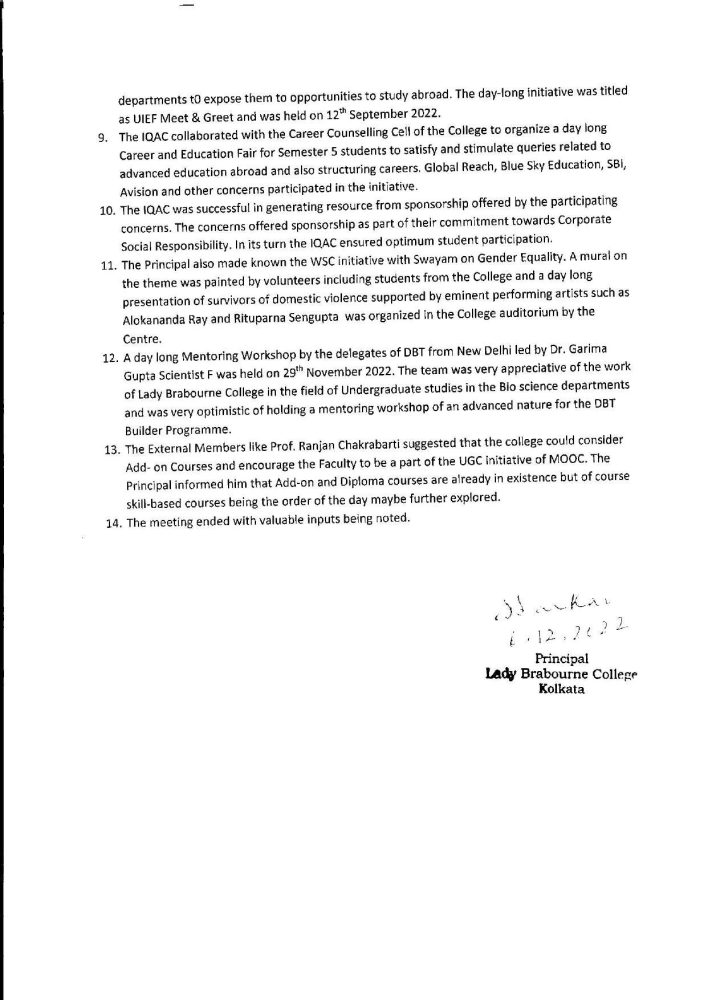
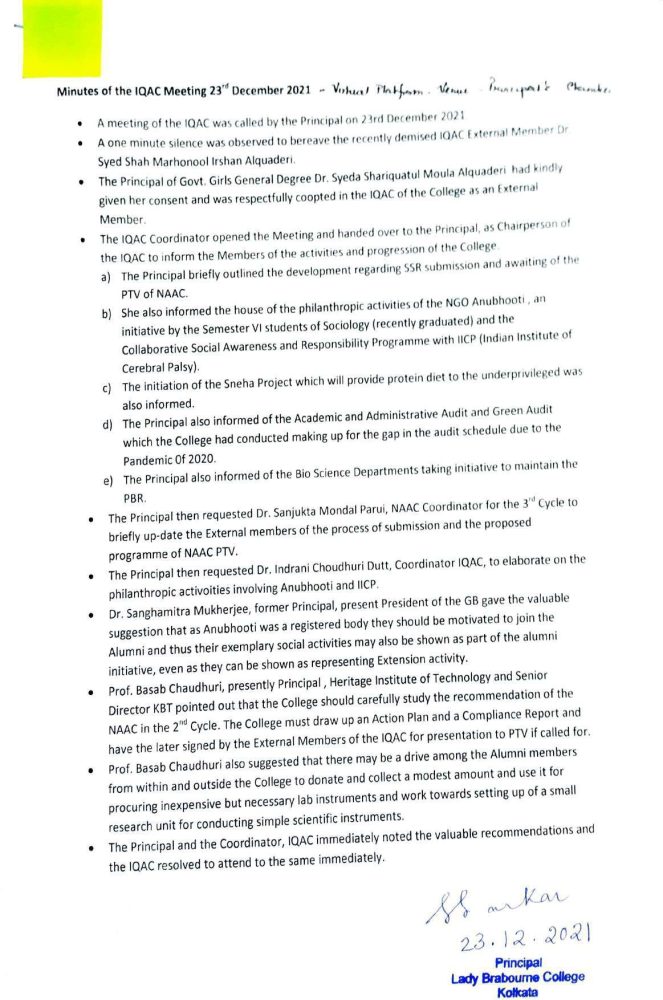
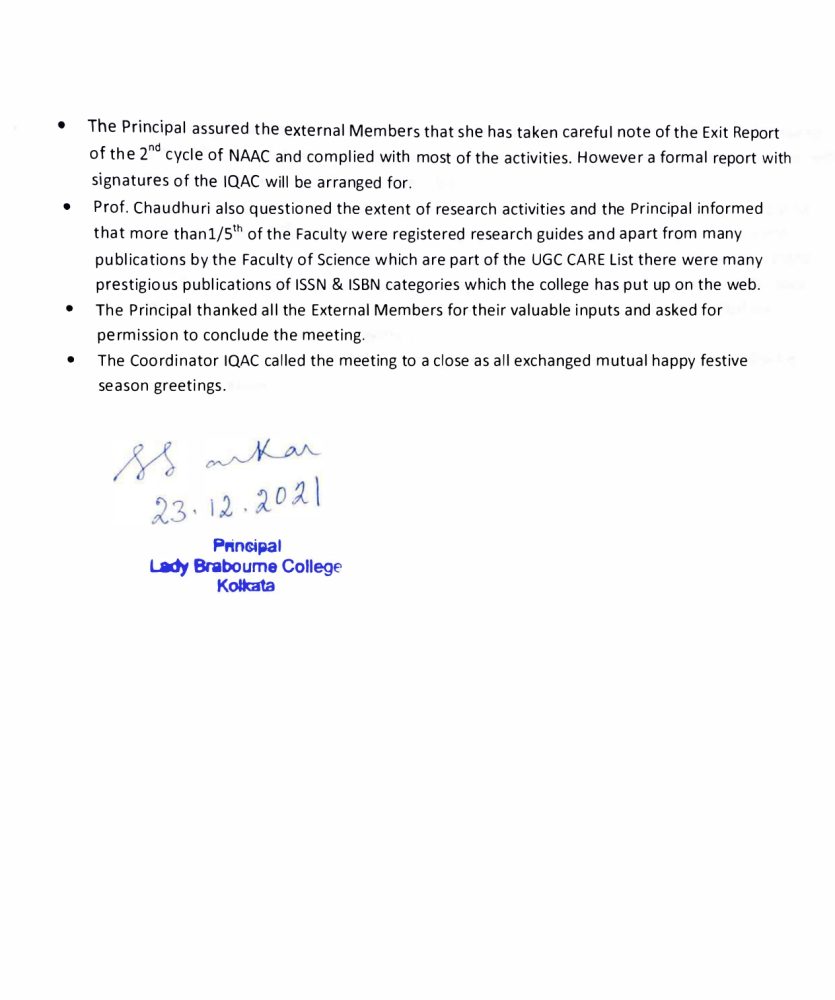
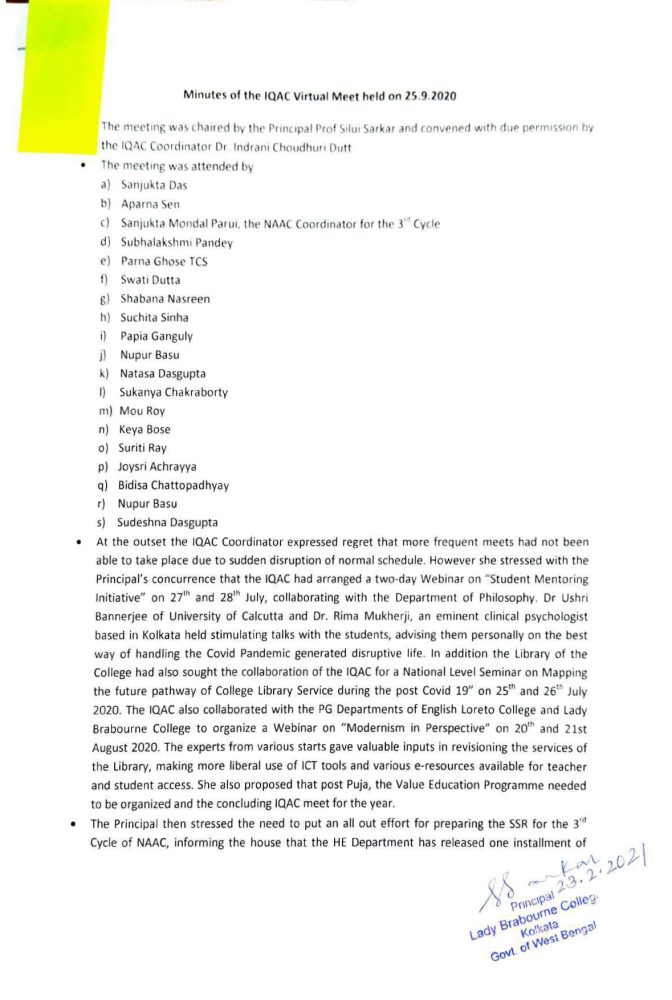
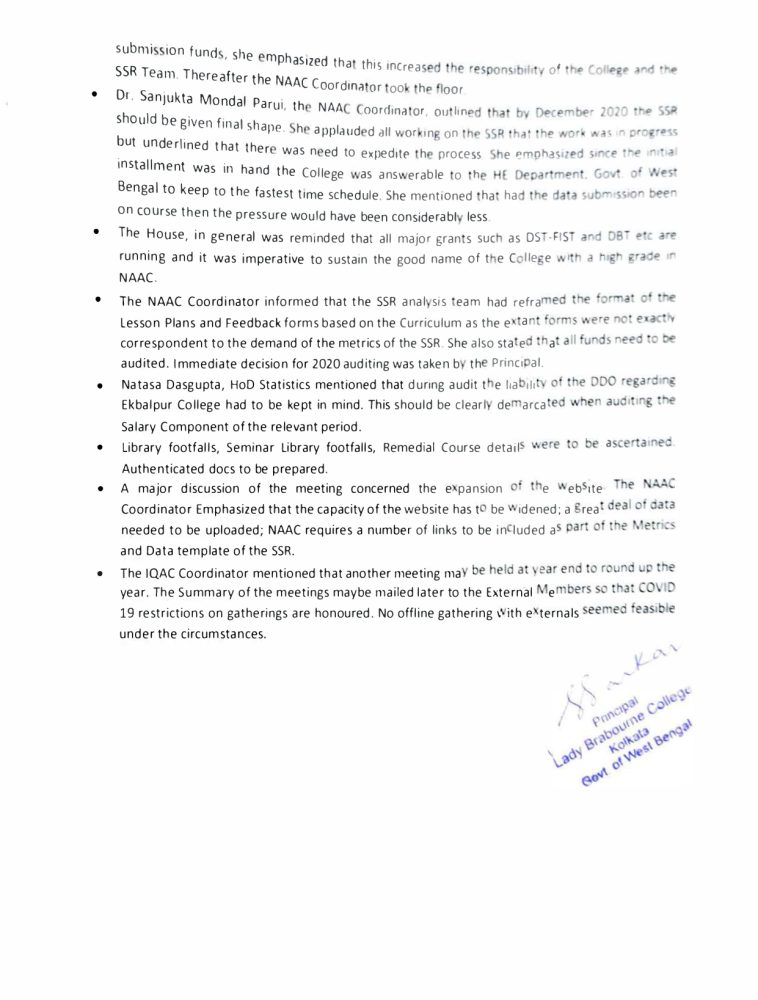
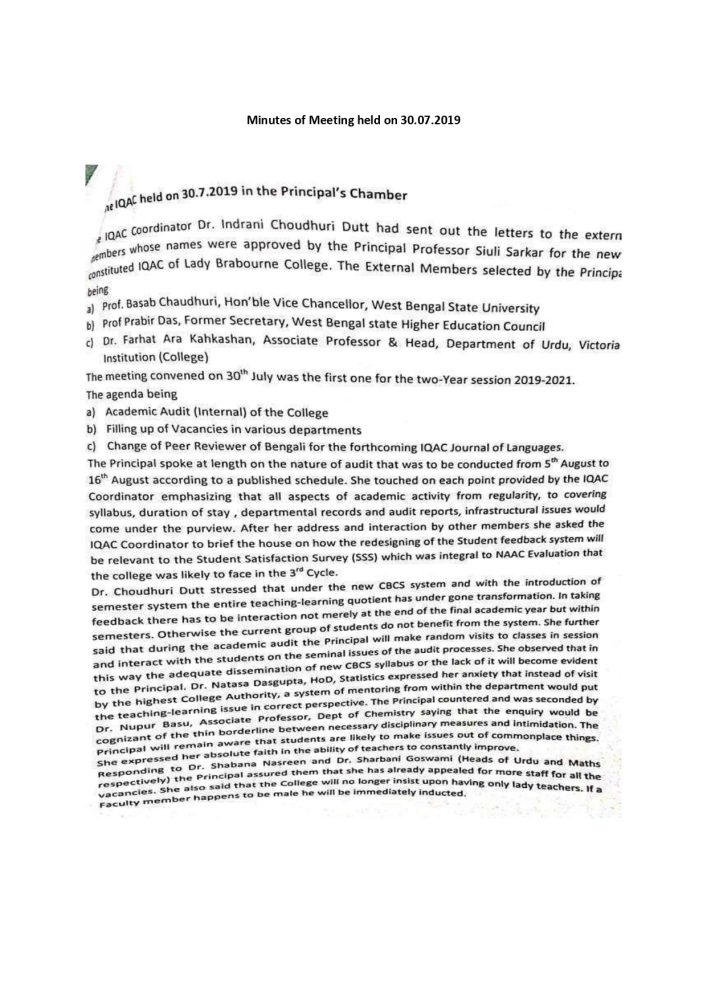
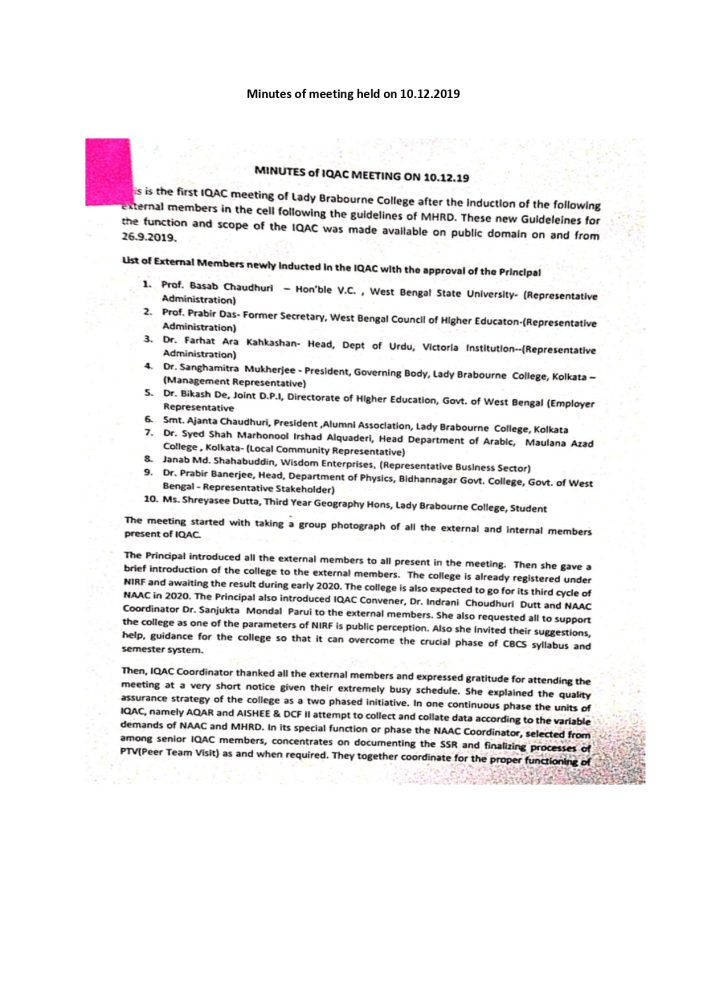
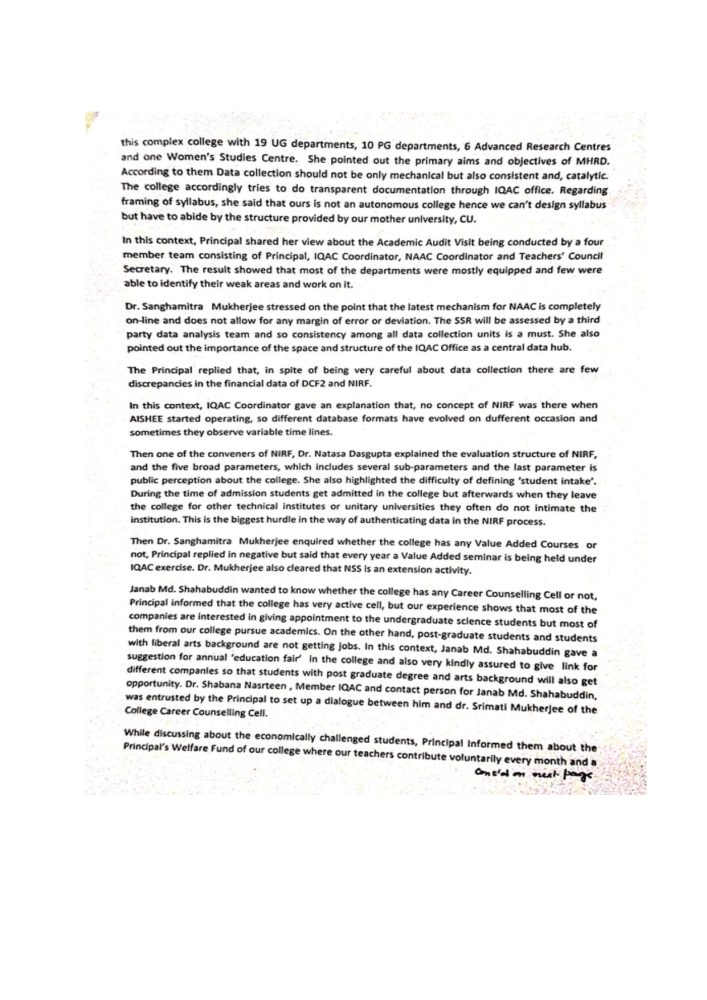
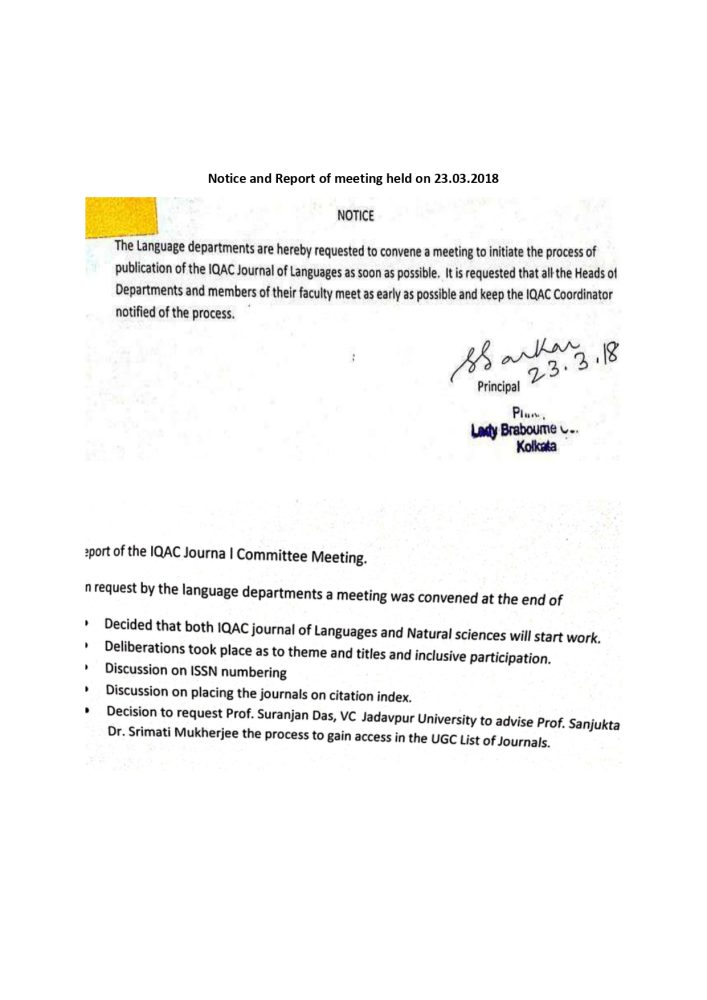
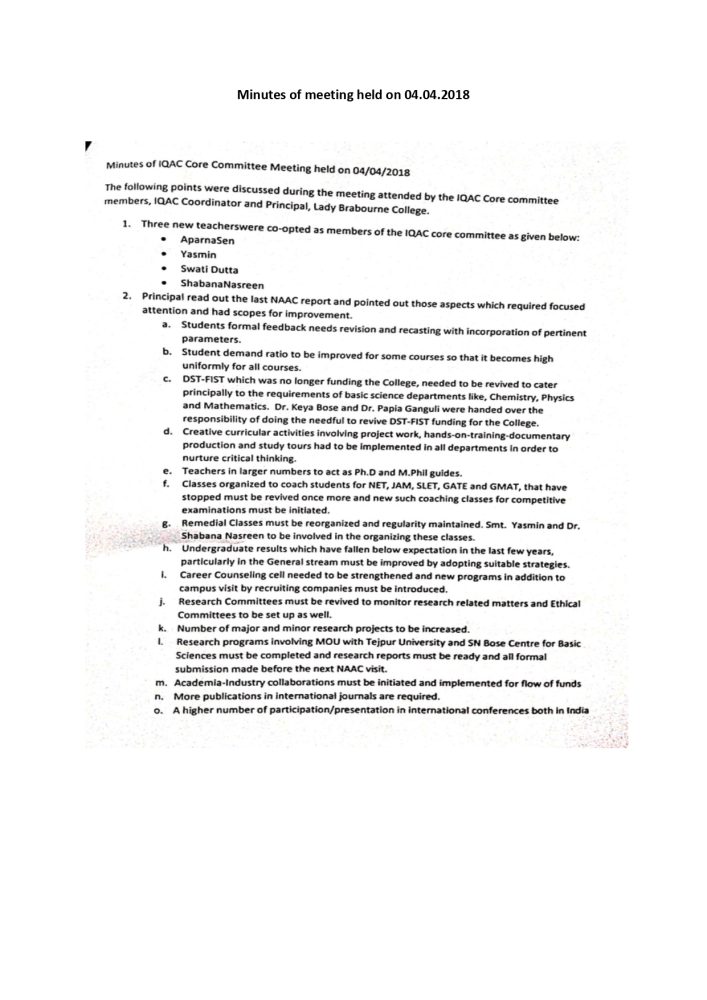
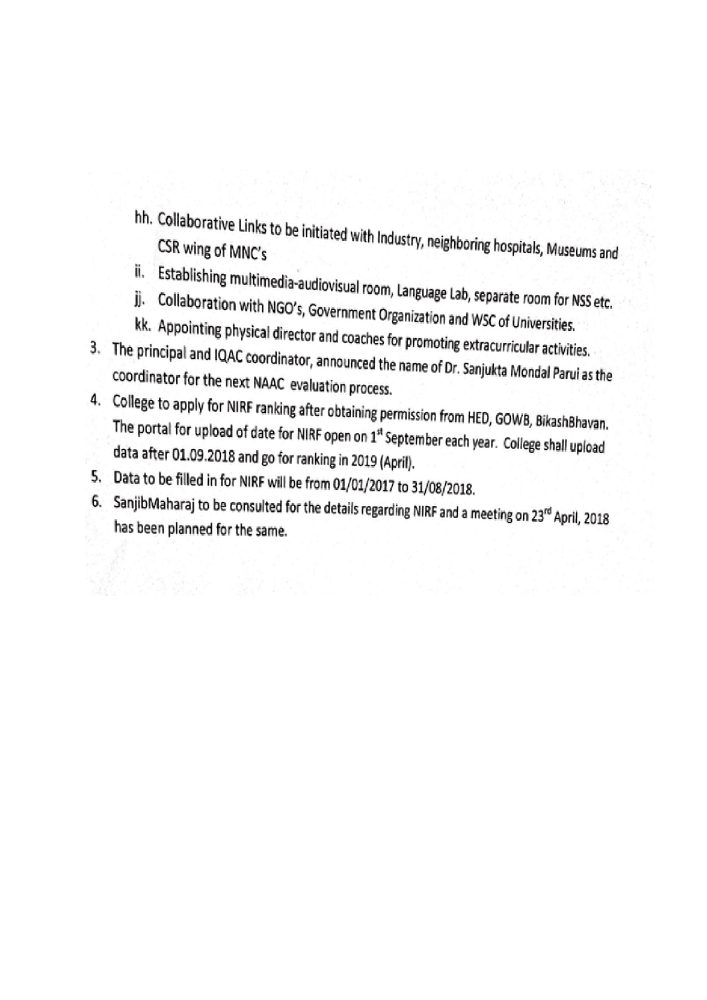
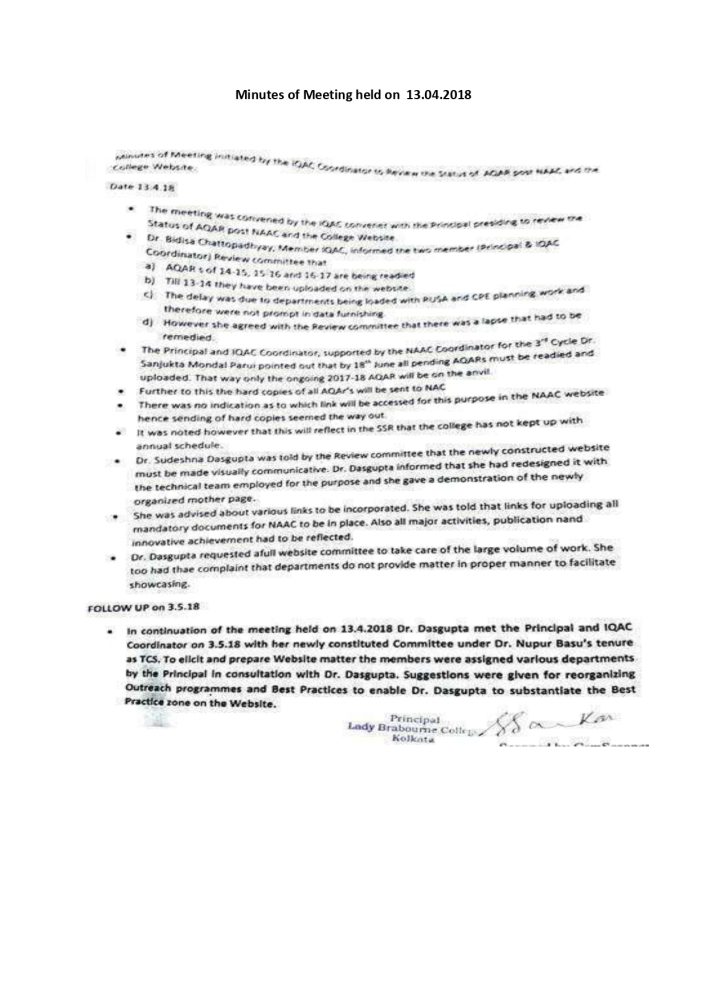
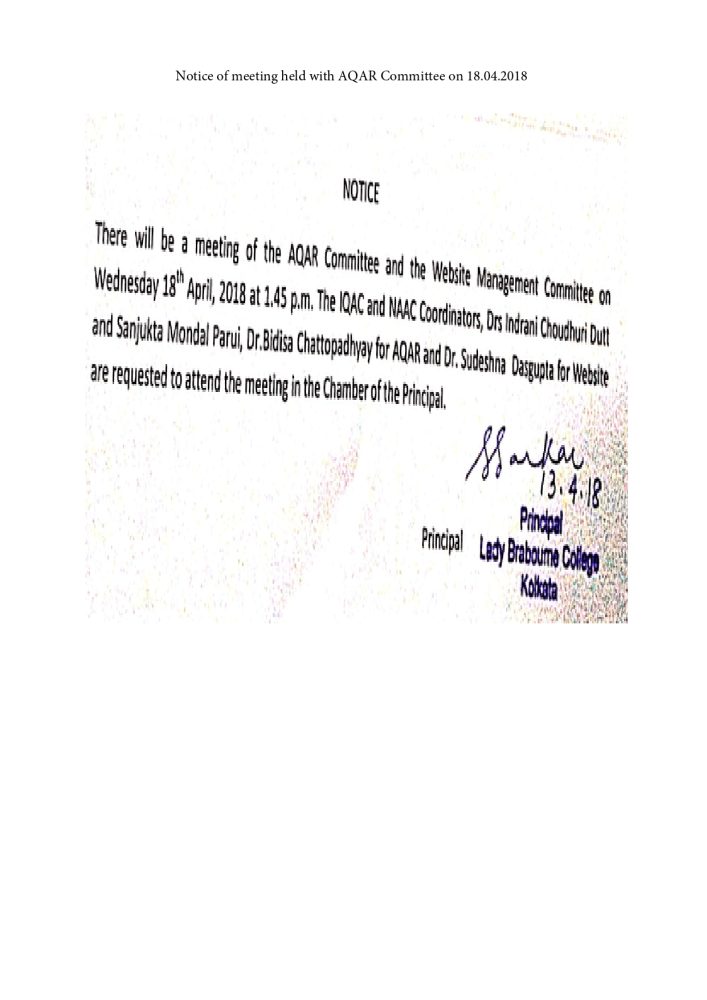
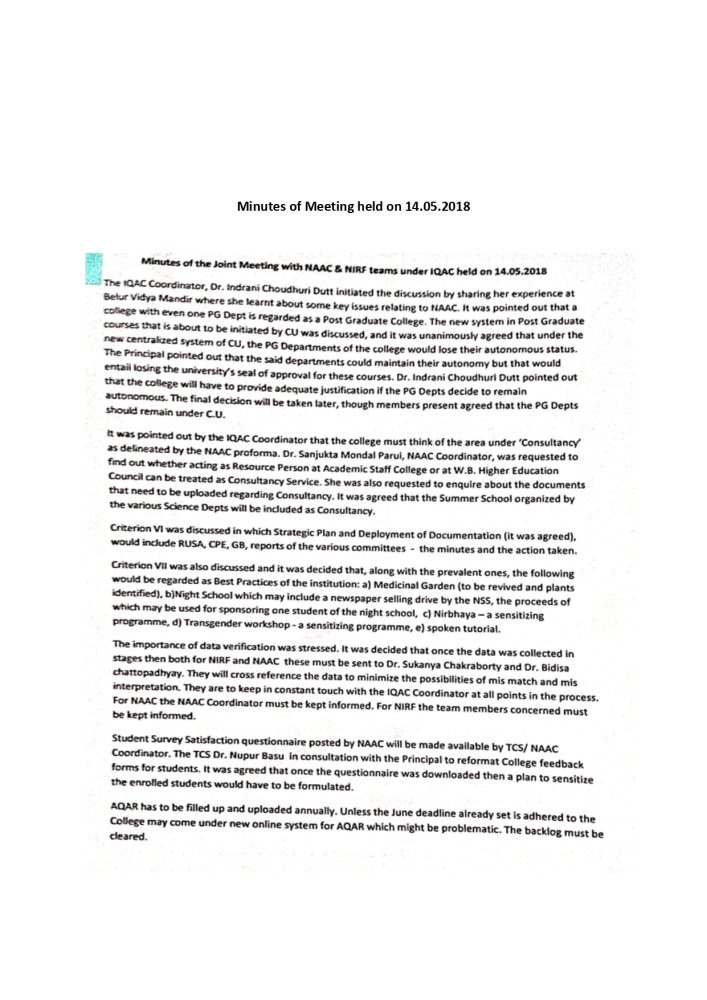
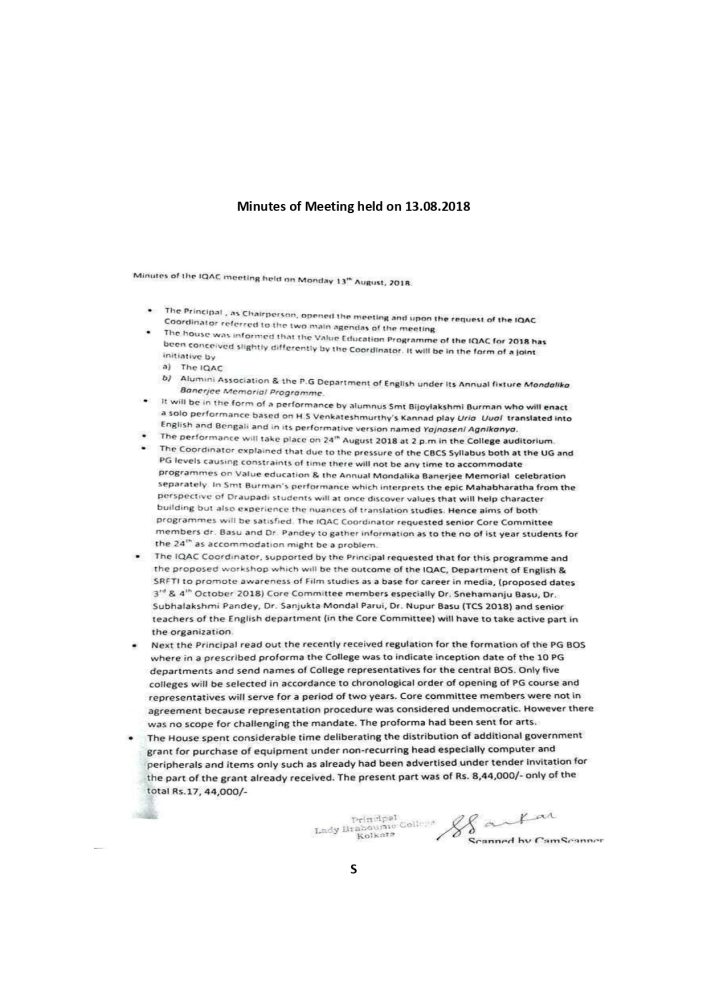
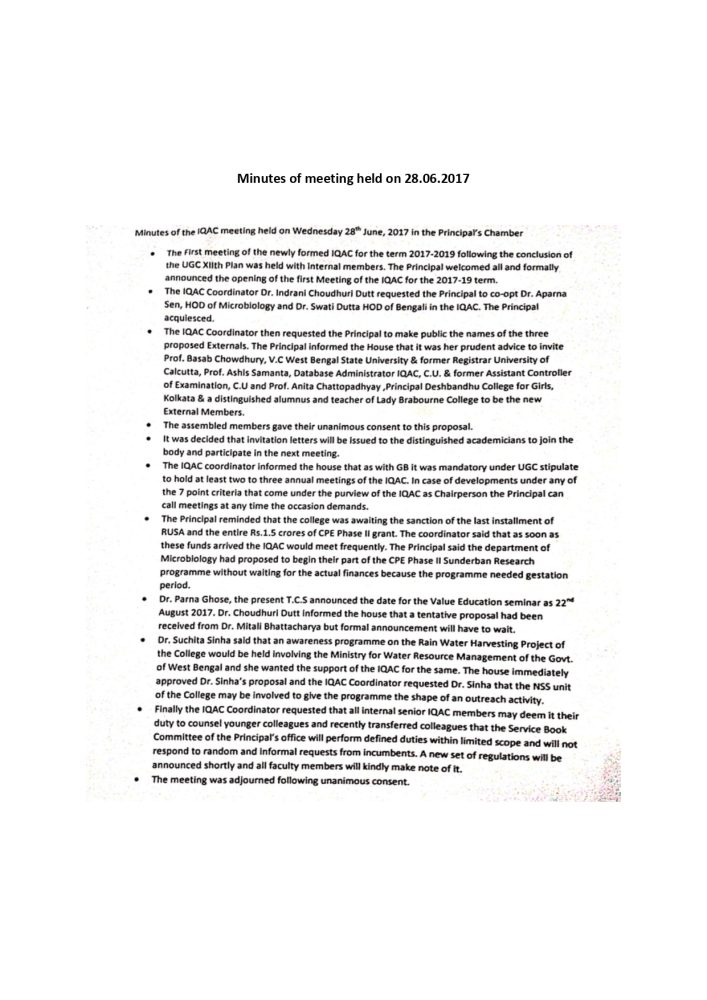
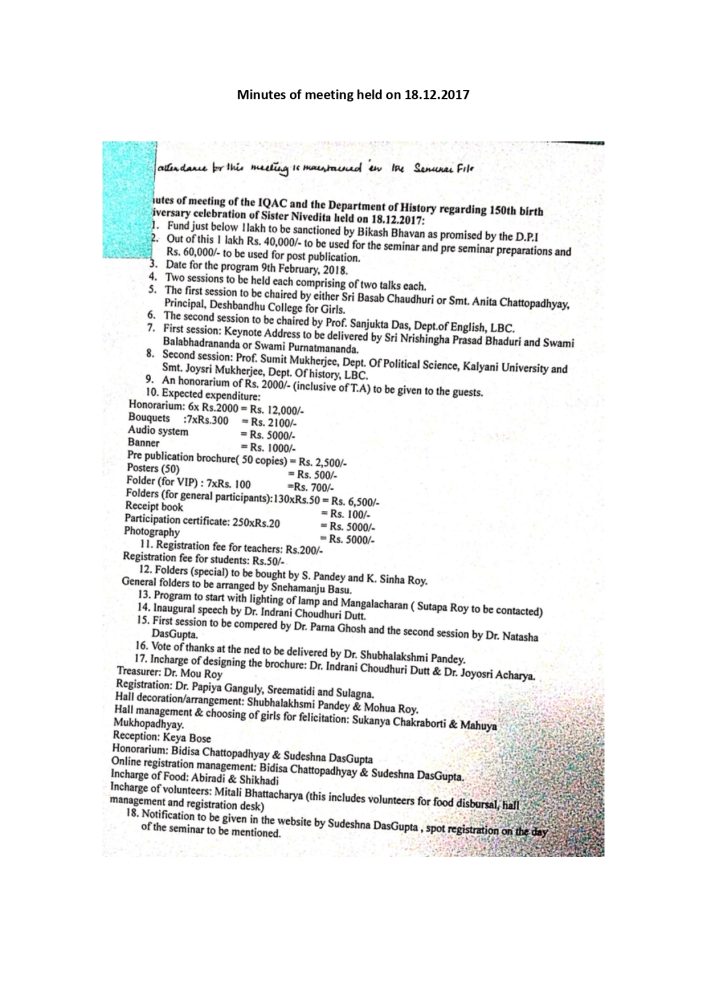
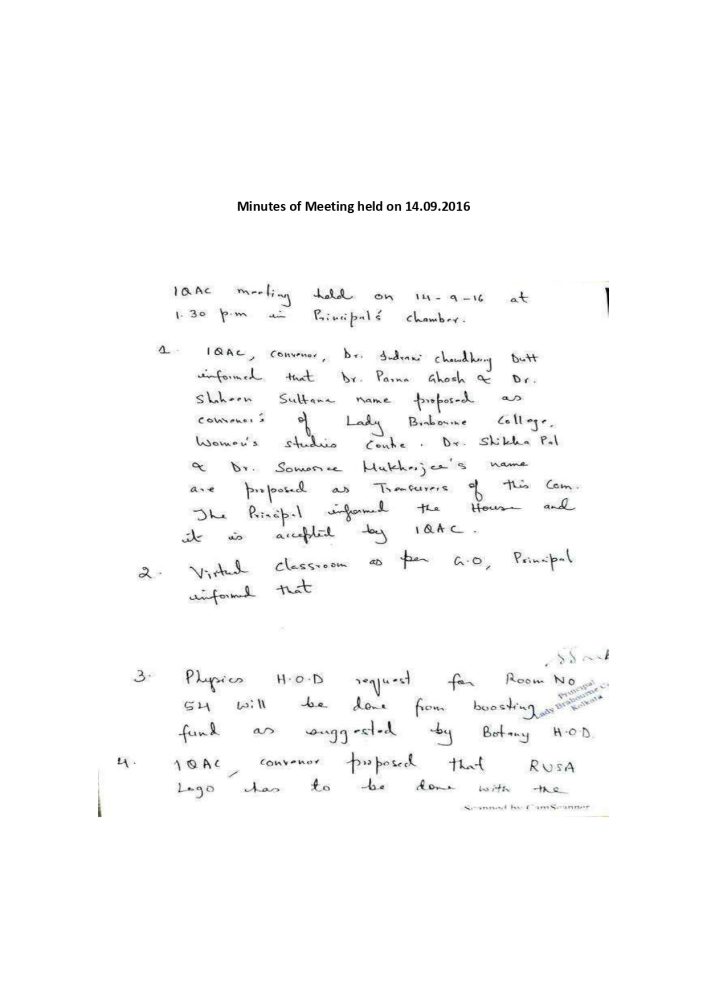
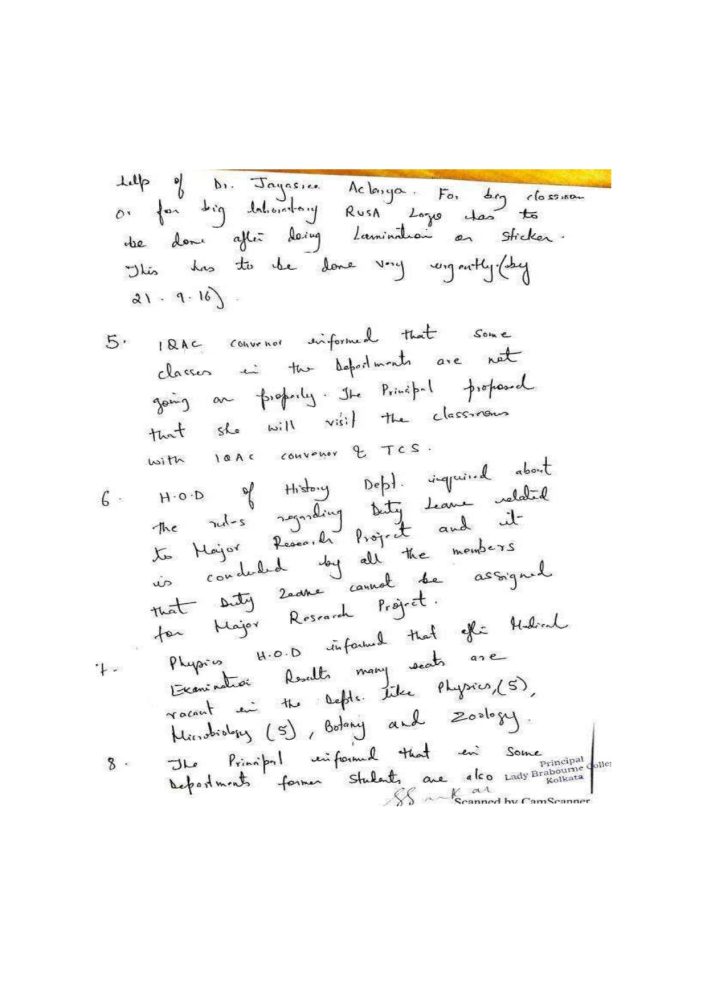
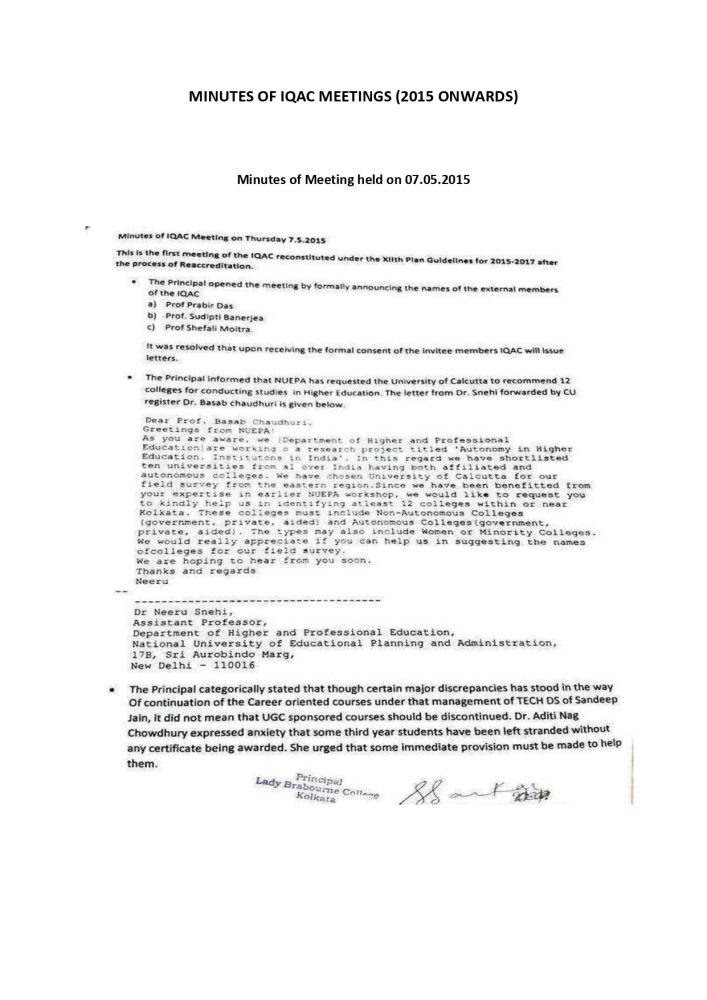
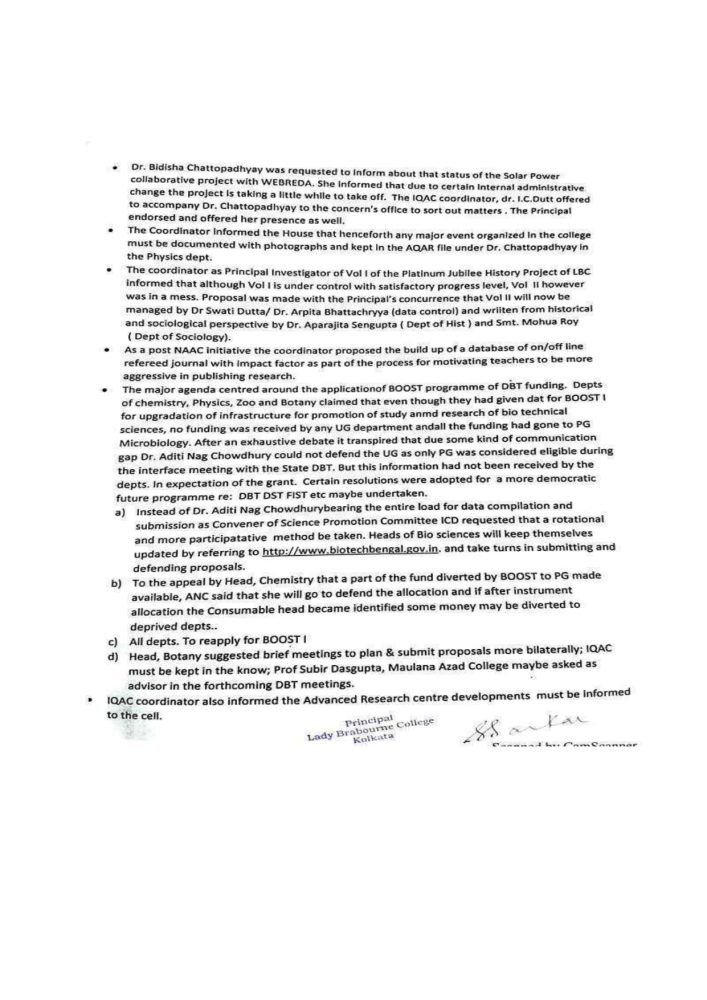
Minutes of the IQAC Meetings
2024
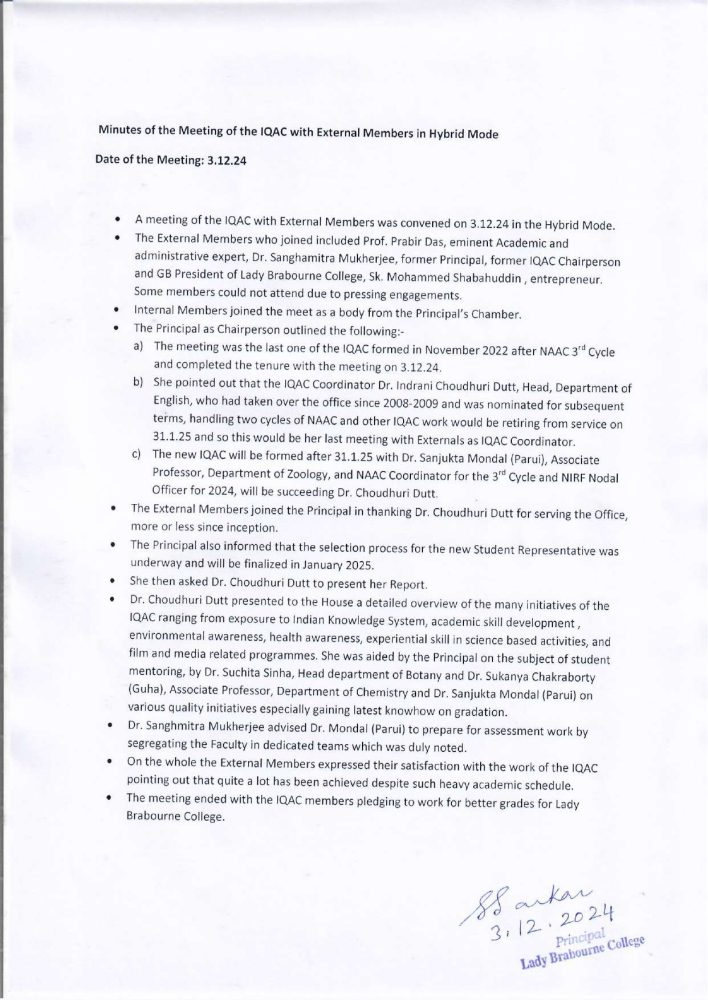
2023
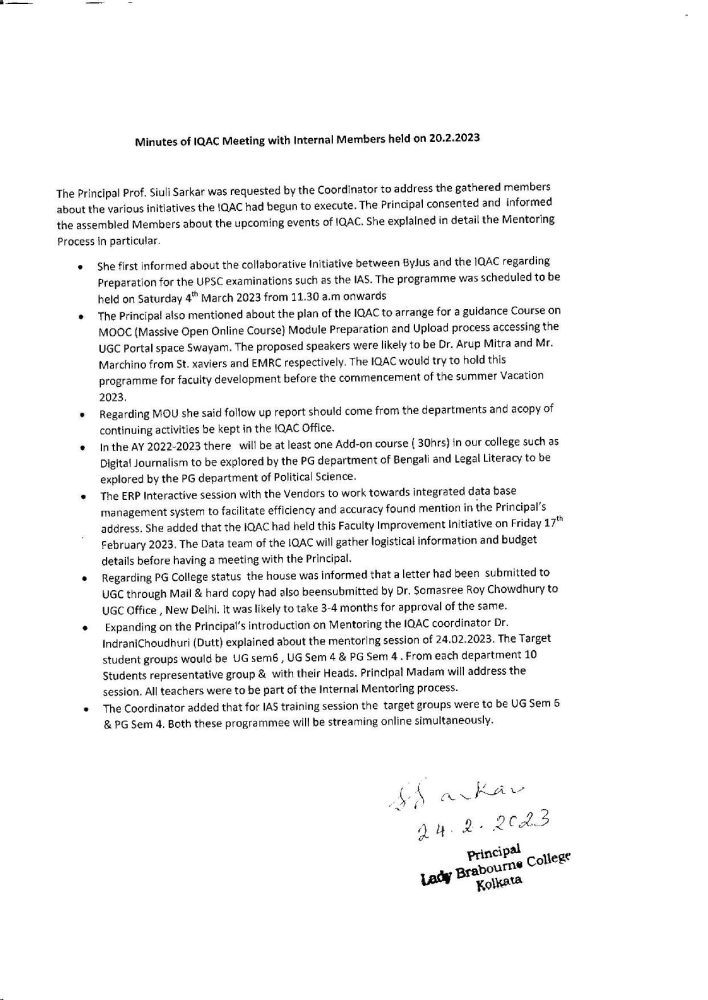
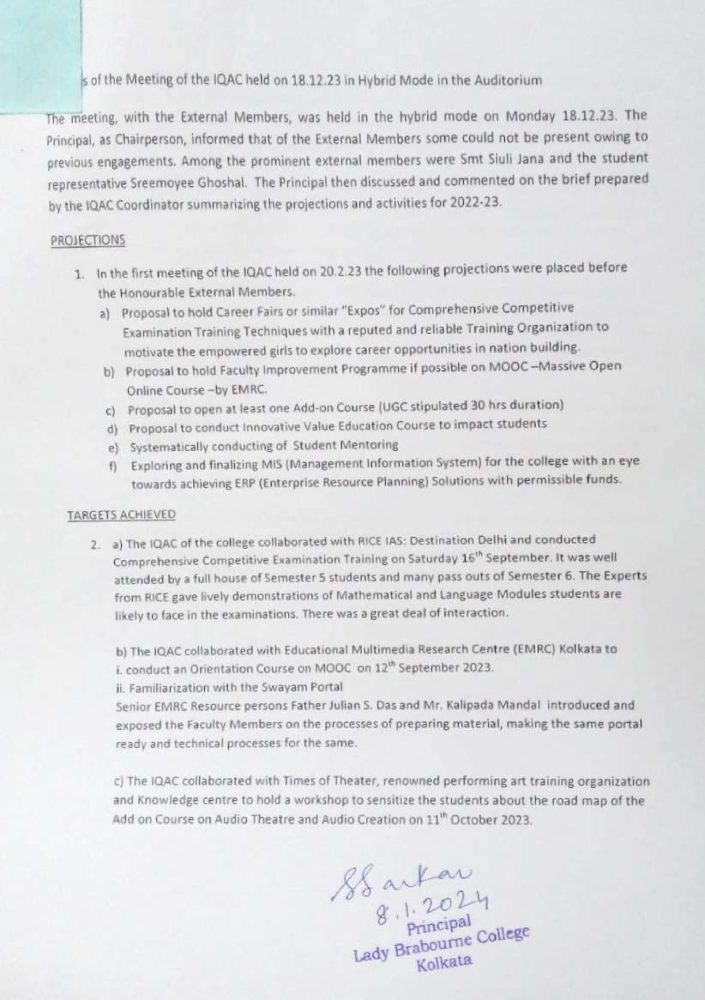
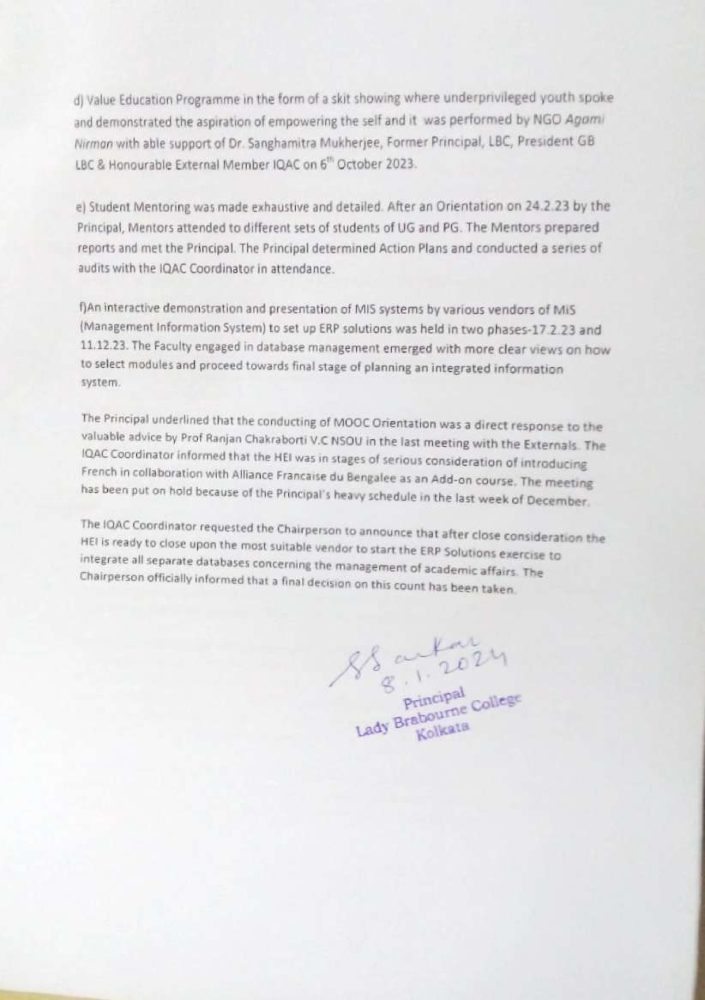
2022
2021
2020

2019
2018
2017
2016

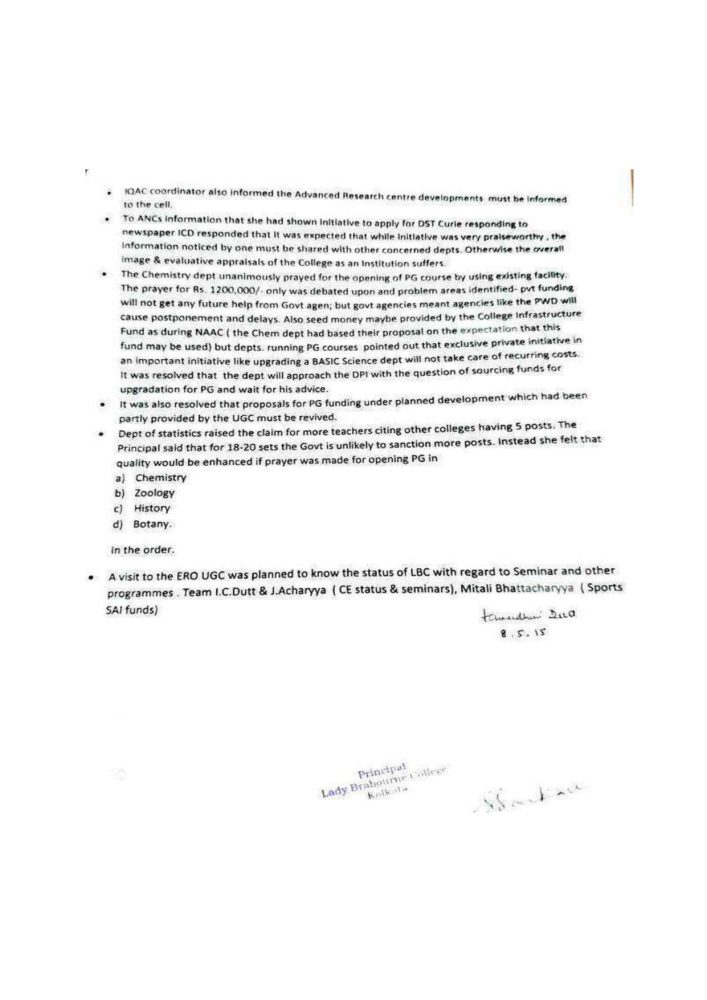
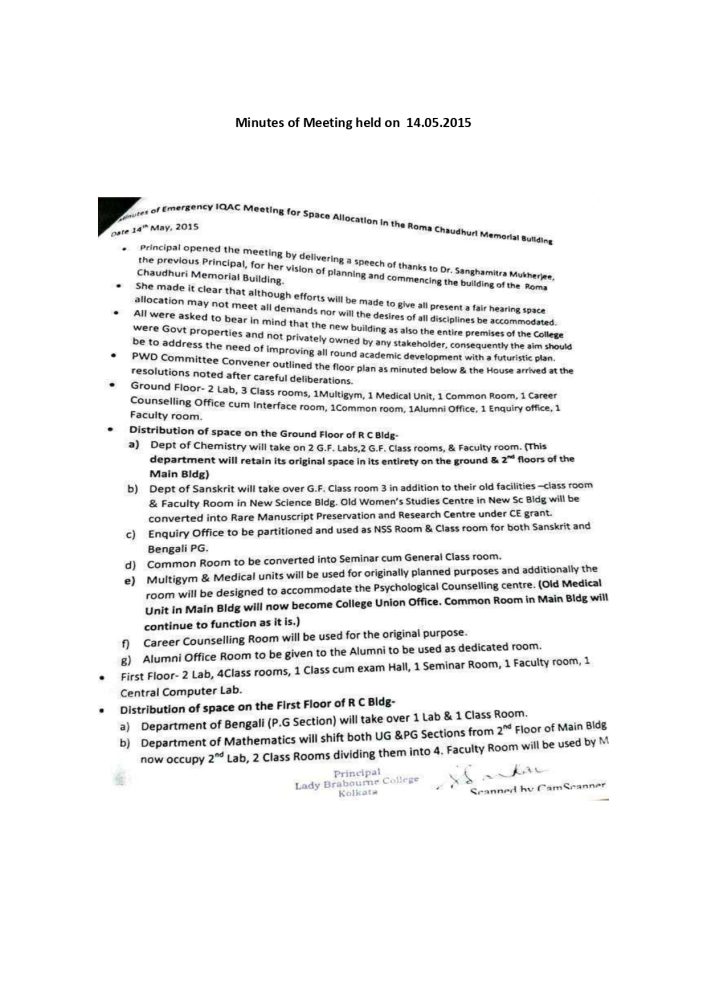
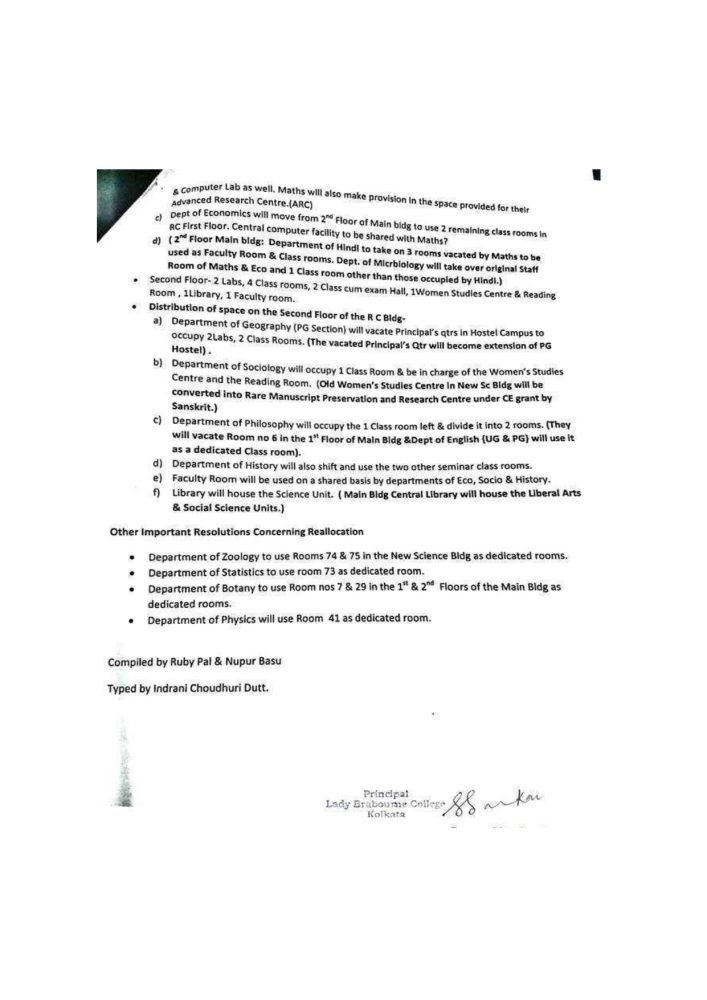
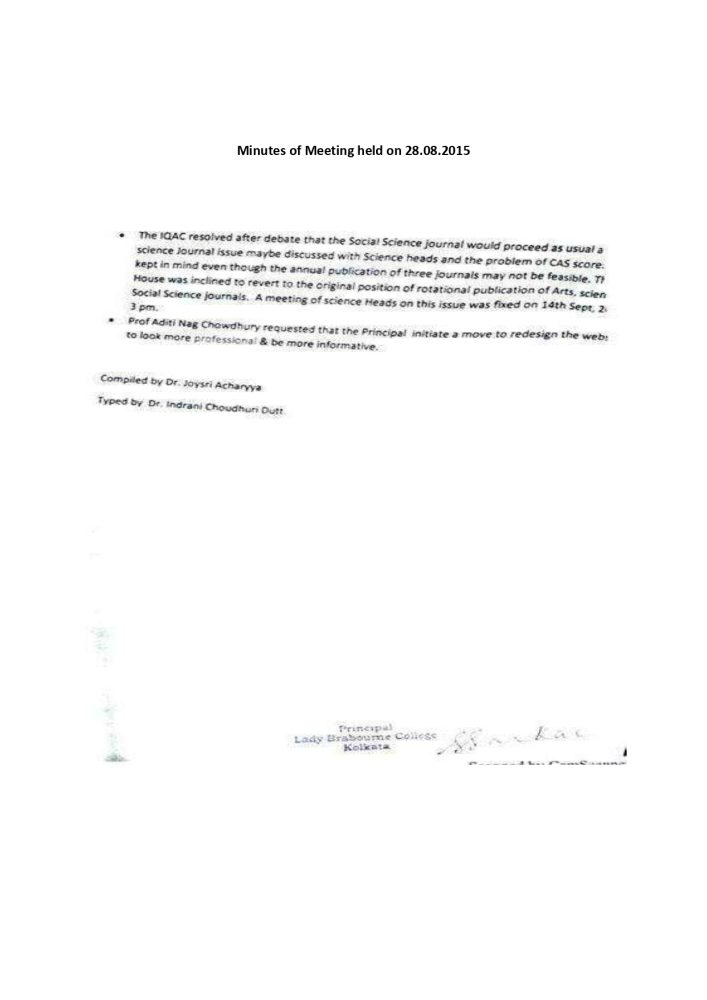
2015
Student Satisfaction Survey
Student Satisfaction Survey Analysis
Student Satisfaction Survey 2023-24
Student Satisfaction Survey 2022-23
Student Satisfaction Survey 2021-22
Student Satisfaction Survey 2020-21
Feedback Analysis
2023-24
2022-23
2021-22
2020-21
Feedback of Students
Feedback of Teachers
Feedback Analysis of Students
2016-20
Feedback of PG Arts Students
Feedback of PG Science Students
Feedback of UG Arts Students
Feedback of UG Science Students
Feedback of Teachers
Feedback Analysis of Students
Code of Ethics
Best Practices
Lady Brabourne College strives to bring about a holistic development in its students by providing them the necessary opportunity and infrastructure for
- Achieving academic excellence
- Enhancing harmony and humanism within and beyond the campus
- Becoming socially conscious and responsible citizens of the country
The Best Practices of the institution reinforce an all-encompassing balanced growth of the pupil. Thus from
- Looking after students’ physical health and psychological needs to providing financial aid and nutritious food to the economically and socially challenged.
- Arranging remedial classes for the academically weak to scheduling career counselling sessions for all.
- Providing a clean and green campus to organizing events for environment consciousness, gender inequality and other social issues.
- Offering divyangjan-friendly and barrier-free premises to coordinating value education programmes and engaging in outreach programmes and community service.
The Best Practices remain an integral part of the institution’s attempt to impart meaningful and quality education.
The best practices followed by the College include:
Best Practices related to Students’ Health and Psychological Needs
Best Practice: 1
Title of the Practice: Good Health Practices with an aim to improve the quality of college student’s life, and help them to lead a life free from diseases and illnesses.
Objectives of the Practice:
Health is an aspect of life that is essentially one of the important factors in basic human performance. Health contributes to general well-being and overall lifestyle. College students should focus on consuming a balanced diet, staying hydrated, and getting adequate amount of sleep, together with exercise and a healthy lifestyle will ensure both physical and mental health. College campuses should have the provision of a medical unit, Psychological counselling cell and gymnasium so that students can take adequate care of their physical and mental health which would improve their academic performance as well.
The Context:
When students enter college, their diets deteriorate and they gain or lose weight. Meals are often skipped by college students, and management of weight and food intake is often non-existent or disordered. Class and work schedules change daily as well as every semester. Several factors can be taken to avoid the weight gain and decline in diet quality that may occur during the college years. The majority of college students conduct a moderate healthy lifestyle, only (50.0%) eat a healthy diet, and (48.7%) suffer from iron deficiency anemia (IDA), while (46.3%) get at least seven to nine hours of sleep, (38.7%) suffer from increased body weight (obesity), and (34.0%) only exercise frequently. The study shows that a high percentage, (75.8%) do not take blood test, at least once every 6 months, and (74.0%) of the students, do not drink at least two glasses of milk per day.
The Practice:
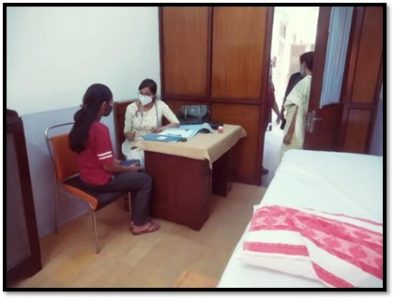
- The College has a Medical Unit, once donated by our Alumni Association, adjacent to the student’s common room. This unit is well equipped with a bed, wheel-chair and First-aid box with medicines. A doctor is available once a week for consultation, who provides service to not only the students, but also to teachers and non-teaching staff.
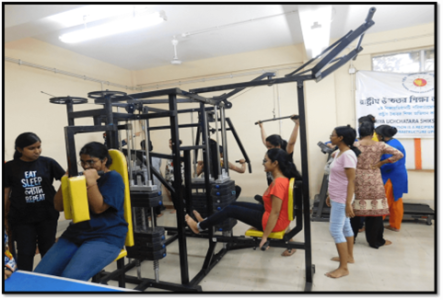
- In order to ensure that the students remain physically fit, they have access to three Gymnasiums that have been set up in the College premises – one in the Roma Chaudhuri Building, one in the Student’s Common Room and the third in the College Hostel. The gymnasiums are equipped with modern equipment and facilities.
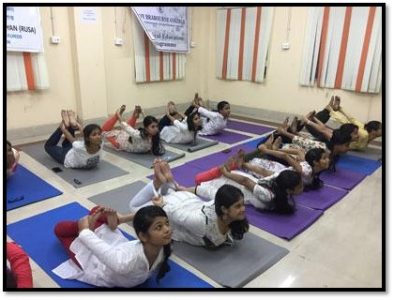
- Yoga classes have been arranged once a week for the benefit of students and teachers. Students are encouraged to acquire yogic skills under the vigilance of certified trainers. The idea is to spread awareness so that students make Yoga a part of their lifestyles in personal time.
- Regular Health Awareness Programmes are organized by the college to reach out to a large number of students, as well as teachers and non-teaching staff, with an aim to share educational health information, raise awareness on targeted health issues, provide demonstrations of healthy practices and create awareness about available wellness program resources. Some of the regular activities include:
- Thalasemia Awareness programme and Detection camp.
- Awareness Programme on Cancer, and other diseases like Dengue, Malaria, Ebola, Swine flu, etc.
- Awareness on benefits of exercise and the consequences of inactivity.
- Impact of diet on health
- Screening for cholesterol, blood pressure, glucose, BMI etc.
- Provide individual health coaching on results and recommendations from those screenings.
Impact
The College not only strives for the academic excellence of its students, but endeavours towards their holistic development. In order to ensure that students get the benefit of remaining physically and mentally fit the above measures have been taken by the College. Many students have been immensely benefitted from the above facilities like the Medical Unit, Psychological Counselling Cell and gymnasium of the College.
Best Practice: 2
Title of the Practice: Psychological Counselling Cell
Objectives of the Practice:
The Psychological Counselling Cell facilitates academic, emotional, social and cognitive development of the students and hence empowers them in their learning and personal development. College students must adapt to environments plagued by rapid change, ambiguity, uncertainty and depleted support systems. Students must also cope with a myriad of personal and psychological problems that range from basic adjustment and developmental, academic and learning, and career concerns to clinical-level mental illness. Within higher education, there exists general consensus that the ubiquitous role of personal and psychological counselling is to contribute to student development, adjustment, and learning while preventing dangerous and self-defeating behaviour, thus enabling the individual to thrive in the college community. The mechanisms that colleges utilize to achieve this goal vary dramatically from one institution to another, depending heavily on the institution’s philosophy or mission, available resources, and campus need.
The Context:
It has been found from a survey that anxiety is the top presenting concern among college students (41.6 percent), followed by depression (36.4 percent) and relationship problems (35.8 percent). Psychological Counselling Cell provides comprehensive guidance programs and services that will equip students with necessary knowledge, attitude and skills to become mature and socially responsible individuals. Mentoring through an individual counselling to resolve their emotional, behavioural, academic, and social issues is usually conducted in the counselling cell.
The Practice:
Since its inception in 2011, the Psychological Counselling Cell of the College has been very active for benefitting our students, teachers and non-teaching staff. Dr. Srimati Biswas, renowned psychologist, is our psychological counsellor. Services are rendered free of cost. Sessions are organized both in the College Campus as well as in the Hostel Campus.
Evidence of Success:
The psychological counselling service in the college is effective in easing the students’ personal difficulties. Students can freely and confidentially express their academic, emotional and personal pressures and concerns to a professional who can help them effectively. The constructive support which has been received from individual counselling has had a positive influence on the academic performance of students.
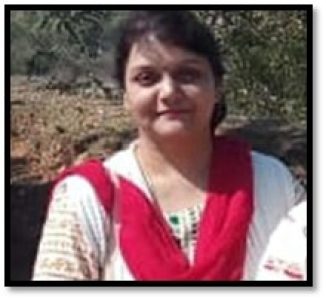
Ph.D., Department of Applied Psychology, University of Calcutta – Counsellor, Psychological Counselling Cell, Lady Brabourne College
Best Practice: 3
Title of the Practice: Student Mentoring (a regular practice)
Objectives of the Practice:
The aim is to explore Student satisfaction with the learning environment and support systems of the HEI and address any lack or need so as to ensure optimum personality development and assure his/her achievement of academic aspirations.
The Context:
The HEI had been initially founded on the basis of the need to address areas in which a student wishes to be engaged to fulfil her aspirations. The desire for higher education of the Muslim girl students led to the founding of the HEI. Traditionally knowing the student intimately to be one with their passion, aim and comfort-level is integral to the Faculty’s approach. The HEI has tried to systematize the traditional approach in a formal and regular way to shape it into a norm.
The Practice:
The details of the Mentors (Name, Contact number, email id) are shared with the students at the beginning of their Academic Session, so that they know their mentors and can meet them personally to discuss their problems or other matters as and when required.
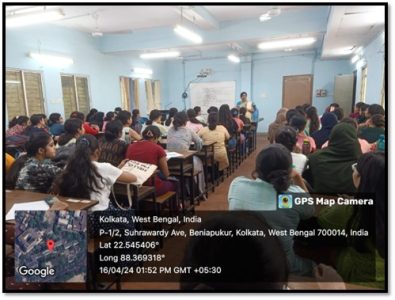
Every year after the completion of the Examinations of the Odd Semesters (5,3 &1 of UG and 1 & 3 of PG) the IQAC determined Mentoring Committee comprising External and Internal Mentors conduct sessions for students of the 5th and 3rd Semesters (effectively final semester students of the continuing sessions). First a Survey Questionnaire, modified annually by the IQAC, is mailed to each student. The Mentors submit a list of Mentees with their registration, email and contact numbers to the IQAC. Thereafter detailed and personal interactive sessions with the students, divided by departments and semesters, take place at segregated venues. Attendance sheets with signatures are kept. The feedbacks are analysed and the highlights are reported to the Principal and action is taken either immediately or in terms of long term planning wherever needed.
Evidence of Success:
- Students open up to the Mentors liberated from the structured class room environment.
- Crucial areas such as Teaching and Learning, Student Support and Progression and Infrastructural facilities are brought under the scanner.
- Incremental increase in Faculty self-analysis which stretches the horizon for self-improvement and overall institutional improvement.
- The Principal and the students come in direct line of contact because of the transparency of the exercise.
Best Practices for Economically and Socially Challenged Students
Best Practice: 1
Title of the Practice: Principal’s Welfare Fund
Objectives of the Practice:
Lady Brabourne college has created a Principal’s Welfare Fund with the objective of making financial assistance available for meeting the welfare needs of students in need, such as emergent medical assistance, purchase of books and study material and any other comparable needs of students.
The Context:
In order to support the less privileged section of the students of the institution, a Principal’s Welfare Fund was created in September 2012. The College has a functioning Principal’s Welfare Fund that provides financial assistance to the differently abled and needy or deserving students to help pursue their studies in the College. Objectives of the fund are- to render financial aid to the poor students to meet their expenses towards tuition fees, purchase of books etc., provided their need is genuine in the opinion of the college authorities.
The Practice:
In the Principal’s Welfare Fund, all teaching staff voluntarily contribute every month and constitute this fund to assist students to apply for financial aid. Over the years many students have been provided financial assistance for payment of tuition fees, hostel fees, medical expenses and participation in educational excursions. Amounts ranging from Rs. 2,250/- to Rs. 1,50,000/- have been disbursed from this fund, depending upon the requirement of the individual applicant, gravity of the crisis and their economic condition.
Evidence of Success:
The services provided by the Principal’s Welfare Fund in this institution of higher learning, is a fundamental requirement that has to be met in an effort to enhance and maintain students’ physical, social, intellectual acuity and subsequently create an environment that encourages high academic performance.
Best Practice: 2
Title of the Practice: Lunch Box
Objectives of the Practice:
Lunch Box aims at ensuring cooked nutritious mid-day meals to the economically challenged students of the college on full working days. The institution considers it as part of its social responsibility to provide adequate nutrition to the socially and economically marginalized students so that they may carry on their academic pursuits without hindrance.
The Context:
The Mid-Day Meal scheme run by the Government of India has proved to be highly beneficial at the school level. Moreover, in the Indian context malnutrition of the girl-child is a major issue in rural as well as urban areas. As the college offers opportunities of higher education to students from all socio-economic classes, it is only natural that a section of its students who belong to the less privileged section of society, find it difficult to pay for and avail of nutritious meals in the middle of a working day. Keeping in mind the needs of these pupils, and taking the Mid-Day Meal scheme as a point of reference, the college has introduced the Best Practice titled “Lunch Box”. Under the scheme underprivileged students can enroll themselves to avail of lunch during full working days.
The Practice:
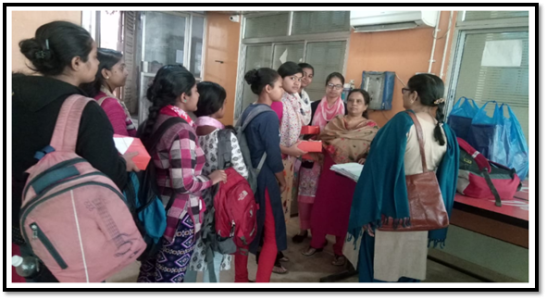
“Lunch Box” was initiated as a best practice to aid willing underprivileged students by providing them nutritious lunch free of cost. The institution has an established practice of aiding financially disadvantaged students through its Students Welfare Committee. The Committee annually calls for applications from interested students. Students are selected for financial aid on the basis of an interview and verification of supporting documents. Aid is offered in the form of waiver of tuition fees, purchase of text books and other educational equipment. However, the College has recognized the need for adequate nutrition of these students. Hence the “Lunch Box” facility has now been introduced. The scheme is being financed through the contribution of the teaching staff of the College. This is a unique endeavour in the context of higher education which aims to address the overall well-being of each student, as academic progress is inextricably linked to nutritional health.
Evidence of Success:
Lunch Box is a successfully running practice which caters to approximately 40 economically challenged students daily. The regular attendance of the students in this programme indicates its viability and success.
Best Practice – Remedial Classes for Slow Learners & Career Counselling Cell for all Students
Best Practice: 1
Title of the Practice: Remedial Classes for Slow Learners
Objectives of the Practice:
Remedial Coaching is organized with a view to:
- Improve the academic skills and linguistic proficiency of the students in various subjects.
- Raising their level of comprehension of basic subjects to provide a stronger foundation for further academic work.
- Strengthening the knowledge, skills and attitudes of these students enrolled in subjects where quantitative and qualitative techniques and laboratory activities are involved so that the guidance and training provided under the program may enable the students to come up to the level necessary for pursuing higher studies efficiently.
The Context:
UGC-sponsored Remedial Classes for SC/ST and the Minority Community was implemented from 27th September, 2008 in order to nurture and uplift the slow learners, so that the student is equipped to safeguard her interests. Later it was extended to all students who needed special assistance.
The Practice:
According to the UGC norms the remedial classes begin one month after the admission of the students to the college. In the course of teaching process during regular class lectures, slow learners and under achievers are identified by the Head of the Departments and the professors of the departments. They keep a record of the academically poor students and it is their responsibility to address the problems of the weaker students and looks into the academic, motivational and social adaptation pattern of the student.
Evidence of Success:
The classes have elicited keen interest in the students, and have shown positive reflection in the results of college and university examinations. It is expected that as the course continues there will be more positive reflection in the results at all levels of the academically challenged learners of the college.
Best Practice: 2
Title of the Practice: Career Counselling Cell
Objectives of the Practice:
Career Counselling Cell is a tool which can be very effective in allowing students to realize their true potential and find work that aligns with their natural inclination. Career Counselling encompasses the concept of educational, vocational, personal and all other forms of guidance. It aims at enhancing the social image and status of the student, develop their personality, to explore their career options and effectively plan their career.
The Context:
The single biggest decision that any college student needs to make revolves around what to do after college i.e., to take up a job after college or pursue a postgraduate course. A career counsellor will guide a student through this whole decision making process and provide suggestion for his/her benefit.
The Practice:
In keeping with the recent trends, the College has a Career Counselling Committee since 2002, which organizes various programmes for career development of aspiring students. The Cell guides students in choosing the right career options in the ever-expanding high-tech global market. The Career Counselling and Placement Cell of the College has tirelessly organized a number of sessions over the years in order to increase awareness among students regarding the kind of opportunities available to them in various professional as well as academic fields. Some of the organisations which participated in such Counselling sessions include Career Enabler, The Institute of Company Secretaries of India, Aptech and Aviation and Hospitality Academy, Endeavour Private Limited and others, which have held interactive sessions with students to provide professional guidance and counselling regarding the future careers that they might opt for.
Evidence of Success:
Over the past few years, our students have been recruited through such programmes and campus interviews in high profile companies like Infosys, Tata Consultancy Services, Cognizant Technology Solutions, Tech Mahindra, Wipro, 3G, Satyam etc. Several foreign universities have sent representatives and many students have applied to those universities using the Placement Cell platform.
Best Practices related to Biodiversity & Environment Conservation
Best Practice: 1
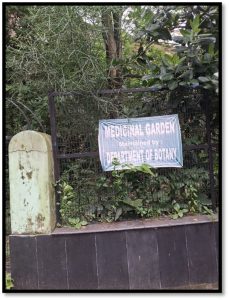
Title of the Practice: Medicinal Plant Garden: a sustainable and healthy practice
Objectives of the Practice:
The aim was to set up an indigenous medicinal plant garden primarily to promote awareness of an experiential nature to the students of the Botany Department to help them get first-hand knowledge of healing and restorative properties of plant and to trace the tradition’s origin to the ancient culture of India “ayurveda” and become cognizant of the heritage of the Indian Knowledge System. The scope was thereafter became wider and the garden was enlisted as asset of the HEI as a whole. It was also hoped that involvement in the maintenance of the garden would give more depth to the sensibility of the necessity of a sustainable environment.
The Context:
The HEI being an urban one and situated in the middle of a congested urban locality of a busy metropolis of a developing country where environmental consciousness is yet to make an effective impact on the common man, it was felt that planting medicinal flora and caring to keep the garden free of pollutants to create a clean, green and healing zone which upon reaching prime will actually combat diseases, would address a real need and translate into real time benefits.
The Practice:
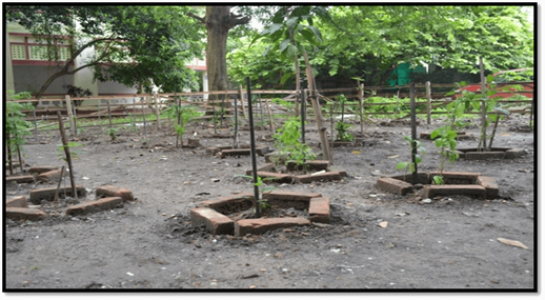
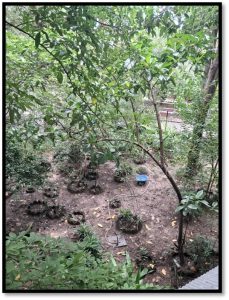
The HEI had made sporadic attempts through the Department Botany to set up a medicinal plant garden but the plots selected were reclaimed for infrastructural expanse or were not suitable for sustaining healthy growth of the saplings. In 2014, a dedicated plot of land was identified in front of the Physics Building and it was weeded and cleaned with nutrients being mixed with the soil. When the plantation site was ready different varieties of medicinal plants were planted and additions were made in a graded stage to give shape to the present flourishing plot.
Evidence of Success:
The well maintained plot lends an eco-friendly zone. The supply of oxygen by the plants has considerably freshened the air in the campus and visits by the Pollution Control Board have earned considerable appreciation. Batches of students have visited and learned from the grown plants the efficacy of plant based medicine and therapeutic opportunities and this has motivated them to consider research prospects and generally become promoters of healthy environment.
Best Practice: 2
Title of the Practice: Butterfly Garden
Objectives of the Practice:
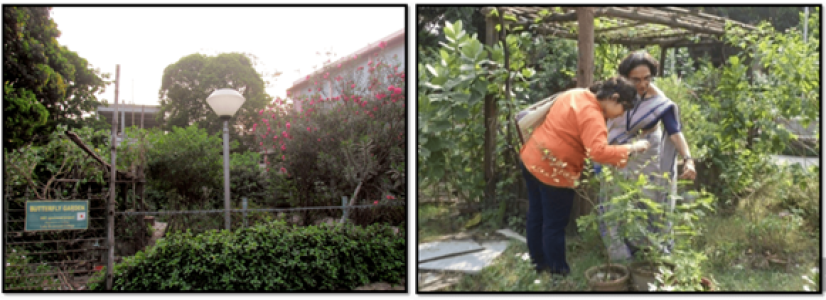
A butterfly garden was set up in the Hostel campus of the college with the main objectives to attract, support, and conserve butterflies by providing them with their specific host plants and essential resources like nectar. The aim was to foster a healthy ecosystem, and promote awareness about butterflies, create a recreational space and contribute to the local biodiversity.
The Context:
Habitat degradation is a multivariate issue. Many natural butterfly habitats have been lost to human activities like construction of buildings and roads, use of pesticides and herbicides and even woody encroachment, and non-native plants. Creating new habitat reduces the impacts of habitat fragmentation and degradation. A butterfly garden can create, improve, and maintain habitat of the butterflies. It helps to increase the number and diversity of butterflies in our immediate surroundings which in turn creates a healthy ecosystem.
The Practice:
The Department of Zoology has developed and maintained a butterfly garden in the Hostel campus as part of a UGC-Major Research Project [Ref. No. F.No. 41-56/2012 (SR) dt. 13.7.12] under Dr. Anuradha Chaudhuri, with a large number of flowering plants which serve as hosts to different species of butterflies.
Evidence of Success:
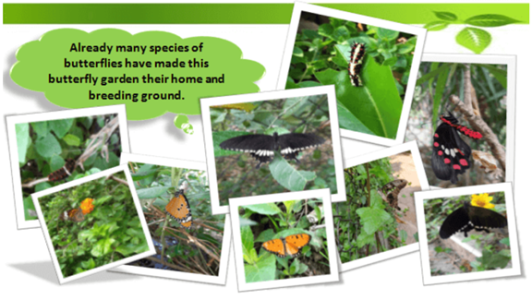
Already many species of butterflies have made this butterfly garden their home and breeding ground.
Best Practice: 3
Title of the Practice: People’s Biodiversity Register (PBR) of Kolkata: A Case Study of Ward No 60
Objectives of the Practice:
As part of a study initiated in Collaboration with Kolkata Municipal Corporation and West Bengal Biodiversity Board, the Departments of Botany, Geography, Microbiology and Zoology conducted sample survey of biotic resources thriving in Ward No. 60, situated within the Kolkata Corporation area. The aim of the study was to:
- Document, monitor and provide information of local flora and fauna for sustainable management of local biodiversity resources.
- To assess the impact of human intervention on the biotic resources of the area.
- To develop exhaustive database of plants and animal species for the conservation of the biotic communities of this part of Kolkata.
Regular survey is conducted which involves identification of the trees, canopy measurements, height measurements, GPS survey, and also Questionnaire survey with the local people to understand the level of perception on the importance of biodiversity, their involvement in the biodiversity conservation measures, raring of animals and so on. Park Circus market is also surveyed to identify the biotic commodities sold every day and their natural sources.
The Context:
People’s Biodiversity Register (PBR) is a register with names of species and their distribution in a given area. It is a comprehensive data base that record people’s traditional knowledge and insight of the status, uses, history, ongoing changes and forces driving these changes on the biological diversity resources of their own localities. Biodiversity registers are being prepared with the help of the local people and hence referred as People’s Biodiversity Register. It provides information on the current utilization patterns of biodiversity and its economic benefits to the local people.
National Biological Diversity Act of India (2002) mandates that local knowledge of biodiversity be registered in a national database, called the People’s Biodiversity Register (PBR). So, one of the mandates of the Biodiversity Board is to prepare Biodiversity Registers not only by local people but also by school/college teachers and students. Preparation of Biodiversity Register is an attempt to realize the biodiversity at each Local level. Identification of biological resources and documentation is one of the prerequisites for the Register preparation which can lead to new discoveries and development of new commercial products, patenting of such products, equitable distribution of benefits, if any, and through this, paving the way for a new economic order in the country through biodiversity conservation.
Kolkata Municipal Corporation and West Bengal Biodiversity Board has started to prepare Peoples Biodiversity Register of Kolkata. In 2020, both the organizations invited the Lady Brabourne College and other academic institutions to take part in this programme. This is a Collaborative work of the College with the West Bengal Biodiversity Board and Kolkata Municipal Corporation.
Importance of PBR
- Local knowledge that is being registered includes utilitarian uses of biodiversity such as for food, fodder, firewood, medicines used in the Ayurveda traditional medicinal system of India, as well as knowledge of traditional conservation practices such as sacred groves and sacred water bodies.
- Document, monitor and provide information for sustainable management of local biodiversity resources.
- Promote biodiversity-friendly development in the emerging process of decentralized management of natural resources.
- Establish claims of individuals and local communities over knowledge of uses of biodiversity resources, and ensure equitable benefit sharing from the use of such knowledge and resources.
- Teach Environmental Science and Biology
- Perpetuate and promote the development of practical ecological knowledge of local communities and of traditional sciences such as Ayurveda and Unani medicine.
- The registers form a baseline data for future management strategies required for the sustainable utilization of biodiversity in a decentralized manner.
- It helps in equitable sharing of benefits arising out of commercial utilization of biodiversity resources and knowledge on their uses.
The Biodiversity Register offers conservation, protection of IPR and the traditional knowledge.
The Practice:
Park Circus area is located within ward No 60, which is a densely populated area of Kolkata. More than 38% of the population in this area is economically backward. Though it is thickly populated area but importance of this ward is high as it is furnished with different educational and health care institutions like National Medical College and Hospital, Aliah University and Lady Brabourne College. Survey is conducted which involves identification of the trees, canopy measurements, height measurements, GPS survey, and also Questionnaire survey with the local people to understand the level of perception on the importance of biodiversity, their involvement in the biodiversity conservation measures, raring of animals and so on. Park Circus market is also surveyed to identify the biotic commodities sold every day and their natural sources.
Evidence of Success:
A preliminary Report on PBR has already been submitted to the West Bengal Biodiversity Board which includes list of trees, medicinal plants, birds, small mammals, butterflies, molluscs, etc. recorded during the survey.
Best Practice: 4
Title of the Practice: Installation of ‘Rain Water Harvesting System’
Objectives of the Practice:
To promote an innovative alternative water supply approach, Rainwater Harvesting System was introduced in the College under the guidance and supervision of the Department of Botany.
The Context:
Rainwater harvesting is an innovative alternative water supply approach. Rainwater harvesting captures, diverts, and stores rainwater for later use. Implementing rainwater harvesting is beneficial because it reduces demand on existing water supply, and reduces run-off, erosion, and contamination of surface water. Rainwater can be used for nearly any purpose that requires water.
The Practice:
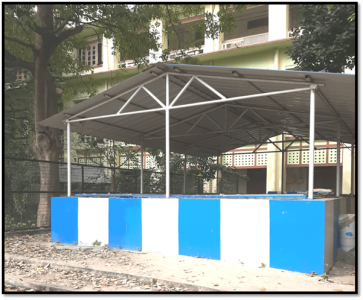
Lady Brabourne College has undertaken the project for Rain Water Harvesting in collaboration with ‘State Water Investigation Directorate, West Bengal’. Rain water is collected from the rooftop of the College and Hostel building with the help of gutters and downspouts. These downspouts are channelized to lead the collected rain water up to a filter bed. The rain water is filtered and then recharged to the nearest aquifer thereafter through a newly constructed bore well. With the initiative of the Department of Botany, the Project was undertaken with Rs. 43 lakh in collaboration with State Water Investigation Directorate, Govt. of West Bengal.
Evidence of Success:
The harvested water is used as drinking water as well as for storage and other purposes like gardening, irrigation etc.
Best Practice: 5
Title of the Practice: Solar Power Project Implementation in Collaboration with WBREDA (a Green energy Initiative of the College)
Objectives of the Practice:
The changing lifestyle with rapid industrialization has made electricity an indispensable and essential commodity over the years. During the last few decades, increasing prices of electricity with increasing demand and decreasing fossil fuel reserves have raised many concerns for policy makers, investors, and customers. To alleviate the concern, policy makers across the world have been looking for some sustainable and feasible alternative input energy sources for electricity generation. They found many options like nuclear, wind, solar, hydro, biomass, tidal, geothermal, and so forth. However, literature supports solar energy as it is the most ready and green option available across the world. The solar energy received by the earth is more than 15,000 times the world’s commercial energy consumption and over 100 times the world’s known coal, gas and oil reserves. And this energy is readily available during the day for anyone to tap and that too free and without any constraint.
The Context:
Lady Brabourne College has taken up a project to make a humble beginning in utilizing nature’s gift of solar energy in meeting ever increasing demand of electricity to some extent. The advantages of solar power are as follows: Renewable energy source
- Reduces Electricity bills
- Diverse applications
- Low maintenance cost
- Technology Development
- Energy production during peak hours
- Applicable everywhere
- Improves grid security
The Practice:
Under this project, in February, 2016, solar panels of 1kWp capacity was installed on the roof top of the main building of the college campus in collaboration with West Bengal Renewable Energy Development Agency, Govt. of West Bengal. In October, 2018, the College installed a Grid Connected Rooftop Solar Photovoltaic system (GRTSPV) having capacity 17.5 kWp using the fund received under CPE phase II scheme. This project was implemented under the active supervision of the Department of Physics. The Grid Connected Rooftop Solar Photovoltaic System with capacity 17.5 kWp has been connected to an existing electricity line having maximum power consumption in the college.
The Impact:
The system is running successfully and the electricity bill has been reduced significantly. In this context it may also be pointed out that so far the Renewable Energy Source i.e. Solar Photovoltaic system has met 6% of the total power requirement of the college.

Best Practices related to Gender Equality and Community Service
Best Practice: 1
Title of the Practice: Women’s Studies Centre to address to gender issues
Objectives of the Practice:
Lady Brabourne College caters exclusively to the educational needs of women. The institution has a UGC funded Women’s Studies Centre which undertakes research on gender issues, organizes seminars and various other programmes to discuss and deliberate on gender issues. The centre publishes materials on research on women’s issues to promote women empowerment.
The Context:
Gender studies play a very crucial role in fostering a more inclusive and equitable learning environment and understanding and challenging systems of inequality. Since its inception in 2010, the Women’s Studies Centre of the college has been exceptionally active in promoting critical thinking in students and preparing them for a diverse world.
The Practice:
The Women’s Studies Centre through its various activities like seminars, workshops, endowment lectures, debates, awareness programmes and a host of other approaches, address the issue of gender inequalities in academia. Using a wide range of both quantitative and qualitative methodological strategies, this centre contributes to various policy practice on advancing gender equality in higher education institutions and research. In March, 2015, on completion of five successful years of its journey, the Centre launched ‘Nirbhaya’ basically an outreach endeavour, deploying creative as well as audio-visual tools to generate awareness about sexual violence against women. The Annual Newsletter with an ISSN number and two books, one in English (The other Universe: An Anthology of Women’s Studies) and the other in Bengali (titled ‘Nari: Bastabe O Kalpabastabe), both with ISBN numbers, have been published.
Evidence of Success:
The Women’s Studies Centre has become another feather to the academic cap of Lady Brabourne College. The students are greatly benefitted from the lectures and workshops of the renowned scholars and personalities who are stalwarts in different fields of Women’s Studies research by listening to them. The Annual Newsletters published by this centre provides updated information on the publications and talks by the faculties of this college in the field of Women’s Studies, which helps the students a lot.
Best Practice: 2
Title of the Practice: NSS (National Service Scheme) aims at developing student’s personality through community service
Objectives of the Practice:
The main objectives of the National Service Scheme (NSS) are:
- understand the community in which they work
- understand themselves in relation to their community
- identify the needs and problems of the community and involve them in problem solving
- develop among themselves a sense of social and civic responsibility
- utilise their knowledge in finding practical solutions to individual and community problems
- develop competence required for group-living and sharing of responsibilities
- gain skills in mobilising community participation
- acquire leadership qualities and democratic attitudes
- develop capacity to meet emergencies and natural disasters and
- practise national integration and social harmony
The Context:
NSS is an Indian public service program sponsored by the India Government. The Motto of NSS “Not Me But You”, reflects the essence of democratic living and upholds the need for self-less service. NSS helps the students’ development and appreciation of other person’s point of view and also show consideration towards other living beings. The philosophy of the NSS is a good doctrine in this motto, which underlines on the belief that the welfare of an individual is ultimately dependent on the welfare of the society as a whole and therefore, the NSS volunteers shall strive for the well-being of the society.
The Practice:
Awareness programmes on Child Sexual Abuse, health and hygiene of women, female deceases and other diseases like cancer, thalassemia, dengue etc., seminars on women empowerment, workshops on Stress management, blood donation camps, plantation programs are regularly organized by the NSS. NSS students who stay in hostel take classes for slum children every five days in a week in college hostel campus from 5 to 7 pm throughout the year. Old clothes are distributed by the students of NSS for needy people who live in slum area and Park circus Maidan area.
Evidence of Success:
NSS training activities help students to develop the qualities of communication, attitude, behavioral aspects and leadership qualities. They get to know about the social, economic and political conditions of the people residing in that particular area which would help them to understand their problems and try to solve them in a better way.
Best Practices during Covid 19 Pandemic
Best Practice: 1
Title of the Practice: Student Mentoring Initiative during Covid 19 Pandemic
Objectives of the Practice:
- To address the psychological need of students.
- To take expert consultation on the prevalent disturbing and alien situation precipitated by Covid 19.
- To invite interaction from students with experts.
- To provide assurance by expert so that future prospects and planning may be done.
The Context:
The HEI was acutely conscious of the disturbed condition of the students due to the Pandemic and Lockdown. Their young lives were interrupted on both the personal and academic fronts. In July 2020, they were still in the initial stages of the online academic activities, many still struggling to come to terms with the virtual world. In this scenario it was considered imperative to pay special attention to mental health especially as students were confined to homes with all outlets coming to standstill. Their academic health was bound to be affected and possibility of future impairments could not be ruled out unless serious attention was paid at an early stage.
The Practice:
A two-day Webinar was organized by the IQAC in collaboration with the Department of Philosophy on 27th and 28th July, 2021. On 27th July, Dr. Ushri Banerjee Assistant Professor Department of Applied Psychology and Coordinator of M.Phil. Clinical Psychology, University of Calcutta held a live interaction with the students enquiring the problems they were facing in their virtual pursuits conducted online.
On 28th July Dr. Rima Mukherji, MRCP (Psych) London, U.K., Clinical Psychologist, Founder Director “Crystal Minds” held an interactive session so that students could share how their personal space was being affected, including their relationships with parents, siblings and the ways they were reacting to the lack of social sharing.
Both days saw constant interaction between the students and the external mentors.
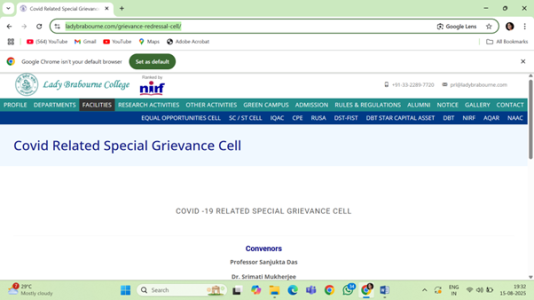
A Covid-19 related Special Grievance Cell (https://ladybrabourne.com/grievance-redressal-cell/ ) was also opened to attend to specific problems faced by the students.
Evidence of Success:
The Orientation of the students under the guidance of the two eminent psychologist/psychiatrists enabled the students to become adjusted to the gruelling online examination system where back- logs were often cleared at one go. Conducting of online classes also became a part of the new normal; performances began to rise. There were no drop-out problems in the continuing semesters. The College also did not receive any intimation from concerned parents about mass behavioural issues at home. When the College reopened for Blended Mode in on 16th November, 2021 after a gap of almost two years there was a seamless transition.
Best Practice: 2
Title of the Practice: Policy of Reduction of Tuition Fees to help Students pursue Programmes during COVID 19
Objectives of the Practice:
- To address stress of students and parents facing economic challenges and hardships precipitated by the Pandemic.
- To ensure smooth and continuous academic progression especially stress free taking of online University examinations.
- To sustain a comfortable academic ecosystem in the HEI so that healthy minds cope with the Pandemic year/s.
The Context:
The HEI was acutely conscious of the disturbed condition of the students due to the Pandemic and Lockdown. Many students both from the middle income group and economically challenged group encountered serious shortage of funds owing to pay cuts and even loss of regular employment of their parent/s. In the online mode it was necessary to constantly purchase and update data packs, in addition to the necessary expenditure of every household. To address this scenario, the Policy of Fees Reduction was adopted.
The Practice:
The HEI led by the Principal and staff in charge of fees collection decided to keep both online and offline payment channels open from December 2020. The rate of fees charged was altered to make it more affordable. A staggered payment collection system was introduced so that maximum allowance to meet fees collection road map could be given. Attention was also paid to expedite the process of refund of admission fees. It was kept in mind that due to the Pandemic, families were under severe constraints and the HEI took the move in full awareness of its social responsibility of reaching out to its stakeholders and help in their learning outcome.
Evidence of Success:
The HEI has not experienced any shortfall in its enrolment of Entry years 2020 and 2021. It is clear that the HEI’s all-round effort at sustaining teaching-learning had paid off; the policy of fees reduction acted as an encouraging impetus to make the student concentrate on academics and look towards a brighter future despite the gloom of the Pandemic.
Best Practice: 3
Title of the Practice: Preparation and distribution of hand sanitizers
Objectives of the Practice:
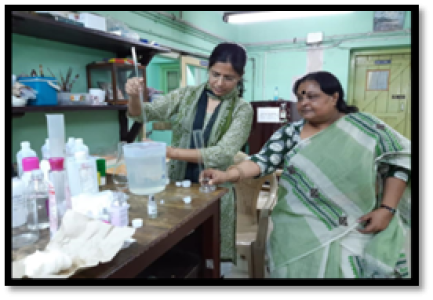
The importance of outreach programmes lies in contributing to society and teaching the younger generations to give back to the community. Thus, in view of the growing demand for hand sanitizers during the Covid 19 pandemic, the Advanced Research Centre of the Department of Microbiology of the College took the initiative of preparing alcohol-based hand sanitizers in their laboratory and distribute them.
The Context:
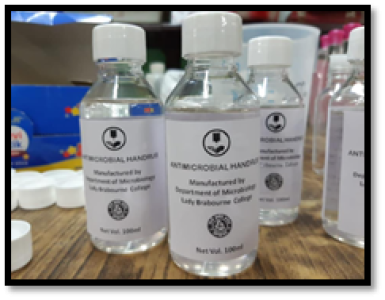
The guidelines laid down by WHO regarding the composition was followed in the preparation of the Sanitizer. The formulation was 100% free of corrosive and carcinogenic chemicals. It was composed of 70% alcohol along with glycerine for moisturization, essential oils for fragrance and rose food colouring to differentiate from plain water. It was named ‘Antimicrobial Handrub’.
The Practice:
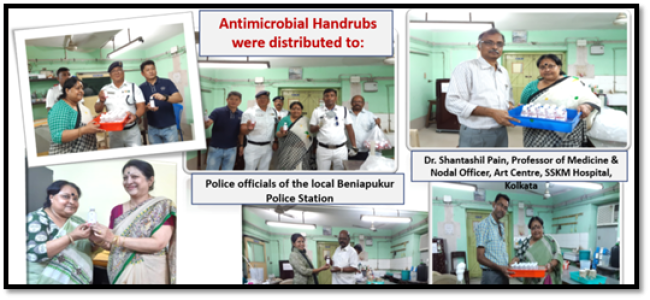
On 20th March, 2020, the Antimicrobial Handrubs were distributed among the first line of target beneficiaries, namely, office staff of the college using public transport, police officials of the local Beniapukur Police Station and Dr. Shantashil Pain, Professor of Medicine & Nodal Officer, Art Centre, SSKM Hospital, Kolkata. Approximately 200 bottles of 100 ml volume of the handrub was distributed.
Evidence of Success:
The Office staff of the College, police officials of the local Beniapukur Police Station and SSKM hospital staff were greatly benefitted from the supply of the handrub.